|
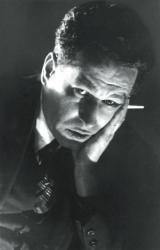
Louis Paul BoonWinner of national and international literary awards. Wrote in Dutch.
Date of Birth: 15.03.1912
Country:  Belgium Belgium |
Content:
- Early Life and Education
- Wartime and Literary Debut
- Post-War Struggles and International Recognition
- Artistic Transition and Legacy
Early Life and Education
Louis-Paul Boon was born on March 15, 1912, in Aalst, Belgium, into a working-class family. At the age of 16, he left school to assist his father in his painting workshop. Evenings and weekends found Boon attending the local Academy of Fine Arts, but financial difficulties forced him to discontinue his studies.
Wartime and Literary Debut
In 1936, Boon married, and with the outbreak of World War II, he was drafted into the army and subsequently captured by the Germans. Upon his return to occupied Belgium, he found work as a glazier.
Boon's first literary attempts date back to the war period. In 1942, he unexpectedly received the Leo Crain Prize for his novel "De voorstad groeit" (The Suburb Grows), submitted secretly by his wife.
Post-War Struggles and International Recognition
After the war, Boon worked as a journalist for several years. His prose, deemed immoral in his native Belgium, went unpublished. Recognition in his homeland only occurred after his books were published in the more tolerant Netherlands.
His reputation spread throughout Europe after the German translations of his novels "De Kapellekensbaan" (Chapel Street, 1953) and "De zomer Sardou" (Summer in Ter-Müren, 1956). Boon became a potential candidate for the Nobel Prize in Literature, but the prestigious award eluded him.
Artistic Transition and Legacy
In 1969, Boon largely abandoned literature for painting. He died on May 15, 1979, at the age of 67. Posthumous fame, accompanied by controversy, surrounded Boon's late erotic novels "Minneke Maaijke, schooldochter" (The Obscene Youth of Mieke Maaijke, 1972) and "Eros en de eenzame man" (Eros and the Lonely Man, 1980).