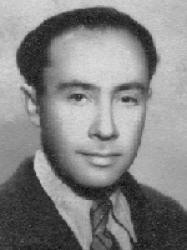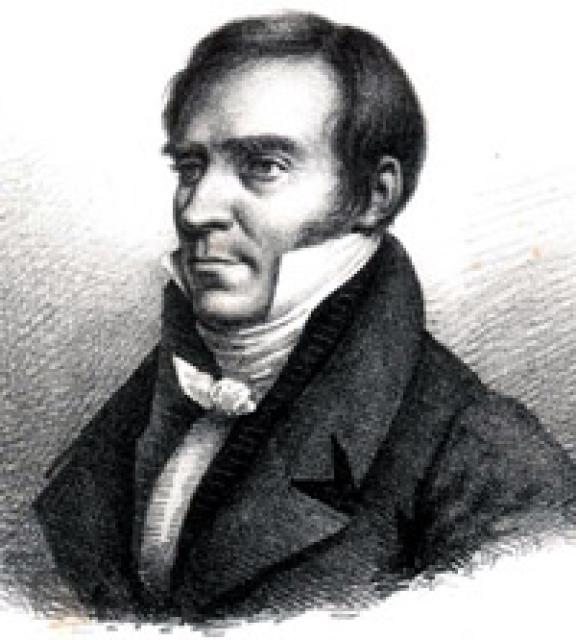
Louis Poinsot
 France
Biography of Louis Poinsot
Louis Poinsot was a French mathematician and mechanic, and a member of the Paris Academy of Sciences. He was born in Paris in 1777. Poinsot received his education at the Lycée Louis-le-Grand, where he prepared for admission to the renowned École Polytechnique. Despite his poor algebra results, Poinsot was accepted into the school in October 1794 at the age of 17. After studying at École Polytechnique for two years and passing the exam, he continued his studies at the École des Ponts et Chaussées with the intention of becoming an engineer. However, while studying civil engineering, Poinsot discovered a true passion for abstract mathematics.
Teaching and Research
From 1804 to 1809, Poinsot served as a mathematics teacher at the Lycée Bonaparte in Paris. He later returned to the École Polytechnique, where he obtained a position as an examiner. In 1809, Poinsot was appointed as a professor of analysis and mechanics. Not only did he teach, but Poinsot also conducted his own research, publishing several works on geometry, mechanics, and statics. By 1809, he had already gained a high reputation as a scientist, and in 1813, he became a member of the Academy of Sciences.
Contributions
In 1803, Poinsot published his most famous work, "Éléments de statique" ("Elements of statics"). This book was later reprinted multiple times and is still used today as a guide for teaching mechanics. In his work, Poinsot applied geometric methods to the study of equilibrium of solid bodies and their systems. It is for his developments in the field of geometry and mechanics that Louis Poinsot is most renowned.
In 1834, Poinsot proposed his own theory of the rotation of a rigid body around a fixed point. He was the first to introduce the concept of an ellipsoid of rotation – a three-dimensional figure formed by rotating an ellipse around one of its principal axes. In 1840, Poinsot was appointed as a member of the Higher Council of Public Education. In 1846, he became an Officer of the Legion of Honor, and after the formation of the Senate in 1852, he was elected as a member of this body. In 1858, Poinsot was also elected as a member of the Royal Society of London.
Throughout his life, Poinsot published numerous scientific works. Some of his notable works include "Sur les polygones et les polyèdres" (1809), "Théorie et détermination de l'équateur du système solaire" (1828), "Théorie nouvelle de la rotation des corps" (1834), and "Mémoire sur les cônes circulaires roulants" (1853), among others.
Legacy
Louis Poinsot passed away in Paris on December 5, 1859. His contributions to mathematics and mechanics continue to be recognized and studied today. His book "Elements of statics" remains a classic in the field and is considered an exemplary work for teaching mechanics. Poinsot's theories on the rotation of rigid bodies and his geometric methods have had a lasting impact on the scientific community.