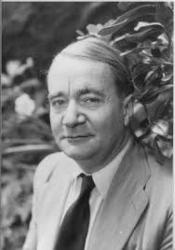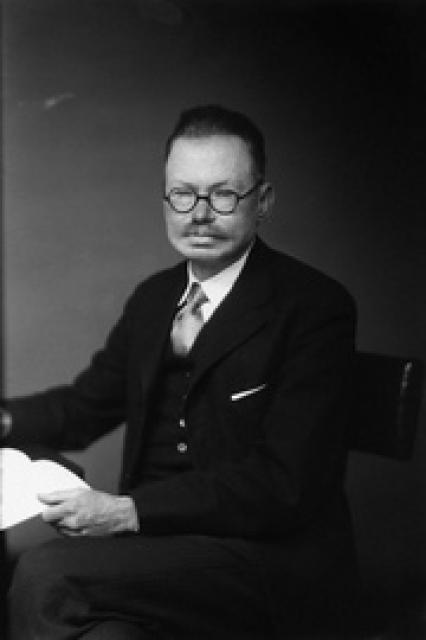
Lucien Laberthonnire
 France
- Lucien Laberthonnière: A Visionary French Theologian
- Academic Career
- Philosophical Influence
- Theological Approach
- Major Works
- Controversy and Censorship
- Later Life and Legacy
Lucien Laberthonnière: A Visionary French Theologian
Early Life and EducationLucien Laberthonnière was born on October 5, 1860, in Chasle, France. He received his education at Catholic seminaries in Saint-Gaultier and Bourges. In 1886, he was ordained as a priest and joined the Oratory.
Academic Career
Laberthonnière served as a professor of philosophy at the college in Juilly from 1886. A year later, he became the head of the school in Massy. In 1900, he returned to Juilly as the college's director. He remained in this position until 1903, when the Oratory was dissolved.
Philosophical Influence
In 1893, Laberthonnière encountered Maurice Blondel's groundbreaking work, "Action." This book had a profound influence on his own philosophical and theological thought. He shared Blondel's emphasis on the primacy of action and the importance of spiritual experience.
Theological Approach
Laberthonnière sought to reform Christian theology by challenging scholasticism and embracing a more personalist and experiential approach. He emphasized the centrality of faith as a lived experience and criticized the intellectualism that dominated traditional theology.
Major Works
Le problème religieux(1897): Examined the nature of religion and argued against the rationalist approach.
Le réalisme chrétien et l'idéalisme grec(1904): Contrasted Christian personalism with the abstract idealism of Greek philosophy.
Essais de philosophie religieuse(1903): Developed a philosophy of religion based on love, solidarity, and the lived experience of the divine.
Controversy and Censorship
Laberthonnière's writings received widespread condemnation from Catholic authorities. In 1913, his journal "Annales de philosophie chrétienne" was placed on the "Index of Forbidden Books." In 1912 and 1913, two of his books were also condemned, and he was forbidden from publishing further works.
Later Life and Legacy
Despite the censorship, Laberthonnière continued to write. His later works, such as "Etudes sur Descartes" (1935) and "Esquisse d'une philosophie personnaliste" (1942), were published posthumously without hindrance. His ideas significantly influenced the development of modern Catholic thought, emphasizing the importance of personal experience and the transformative power of love.