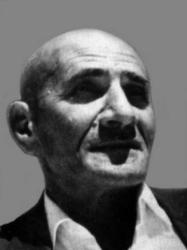
Lucio Costa
 Brazil
- Early Life and Education
- Modernist Movement in Brazil
- Functionalist and Traditionalist Designs
- International Recognition
- Brasília: A Monumental Vision
- Later Career and Legacy
Early Life and Education
Lucio Costa: The Early YearsBorn in France to a Brazilian admiral, Lucio Costa's early life was shaped by international influences. He received his education in England and Switzerland before returning to Brazil in 1917.
Modernist Movement in Brazil
Costa in CollaborationIn the late 1920s, Costa collaborated with modernist architect Gregori Warchavchik, and in 1930, he became the director of the School of Fine Arts. As a renowned educator, he mentored notable students such as Oscar Niemeyer.
Functionalist and Traditionalist Designs
Costa's Artistic LegacyCosta's most famous work from the 1930s is the Ministry of Education and Health building in Rio de Janeiro (known as the Gustavo Capanema Palace). This design showcased the influence of Le Corbusier (who initially consulted on the project) alongside elements of traditional colonial style, combining functionalist brise-soleils with azulejos tiles.
International Recognition
Costa's Global ImpactIn addition to his work in Brazil, Costa collaborated with Niemeyer on the Brazilian Pavilion at the New York World's Fair and designed the current Russian consulate in Rio. He also created the park at Laranjeiras. In 1952, alongside Corbusier, he designed the Maison du Brésil in Paris.
Brasília: A Monumental Vision
Costa's MasterpieceCosta's crowning achievement was his 1957 competition-winning design for the new capital city of Brasília. This project garnered him international acclaim and continues to be celebrated as a masterpiece of modern architecture.
Later Career and Legacy
Costa's Continued InfluenceFollowing his work on Brasília, Costa became a professor at Harvard University in 1960. He focused on his work at the Institute for Historic and Artistic Heritage before passing away in 1998, leaving behind two daughters. Costa's legacy continues to inspire architects and urban planners worldwide.