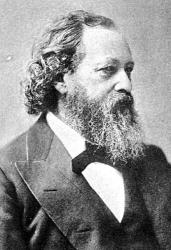
Edwin Landseer Lutyens
 Great Britain
Biography of Edwin Lutyens
Edwin Landseer Lutyens, a British architect, was known for creatively adapting traditional architectural styles to the demands of his era. He was the author of numerous English country houses. Lutyens was often referred to as the "greatest British architect" and played a key role in designing and building New Delhi, which later became the seat of the Indian government. In recognition of his contributions, New Delhi is also known as Lutyens' Delhi. Along with Herbert Baker, Lutyens was the chief architect of several monuments in New Delhi, such as India Gate. Lutyens also designed the Vice Regal House, now known as Rashtrapati Bhavan, the presidential palace. He was awarded the Order of Merit, Knight Commander of the Order of the Indian Empire, and became a member of the Royal Institute of British Architects.
Early Life and Education
Edwin Lutyens was born on March 29, 1869, in London and grew up in Thursley, Surrey, in the southeast of England. He was named after his father's friend, artist and sculptor Edwin Henry Landseer. Lutyens studied architecture at the South Kensington School of Art in London from 1885 to 1887. After college, he joined the architectural practice of Ernest George and Harold Peto, where he first met Sir Herbert Baker.
Architectural Career
In 1888, Lutyens opened his own practice, and his first commission was the construction of a private house in Farnham, Surrey. Through his profession, he became acquainted with garden designer Gertrude Jekyll. In 1896, Lutyens began working on Jekyll's house in Godalming, Surrey, which marked the beginning of a long professional partnership. Together, they designed numerous comfortable and modern country houses. Lutyens-Jekyll gardens were characterized by an abundance of frost-resistant shrubs and ornamental grasses, combined with classical stairs, balustrades, terraces, and brick-paved paths. They favored lilies, lupins, delphiniums, and lavender, achieving a natural look that is still associated with the English garden worldwide. Lutyens' reputation extended beyond the UK thanks to the magazine "Country Life." By the beginning of the 20th century, Lutyens' work, which bore the imprint of the Tudor style, became more classical. Among his projects were residential houses, palaces, churches, schools, and administrative buildings, many of which are now national architectural landmarks. By the end of World War I, Lutyens became one of the three principal architects of the Imperial War Graves Commission and contributed to the creation of several memorials honoring the fallen. The most famous of these monuments are the Cenotaph in Whitehall, Westminster, and the Thiepval Memorial on the Somme.
Later Years and Legacy
In 1918, Lutyens was knighted, and in 1921, he became a member of the Royal Academy of Arts. In 1924, he was appointed a member of the newly established Royal Fine Art Commission, a position he held until his death. Despite dedicating much of his time to construction in New Delhi since 1912, Lutyens continued to receive commissions from all corners of the British Empire. He designed several commercial buildings in London and the British Embassy building in Washington, D.C.
In August 1897, despite parental disapproval, he married Lady Emily Bulwer-Lytton, the third daughter of former Viceroy of India Edward Bulwer-Lytton. They had five children, but the marriage was troubled from the beginning as Emily, who had an interest in Eastern mysticism, became involved in theosophy and was charmed by Indian philosopher, writer, and speaker Jiddu Krishnamurti. Edwin Lutyens passed away on January 1, 1944, at the age of 74. In his last years, Lutyens suffered from pneumonia and was diagnosed with cancer in the early 1940s. His memorial was designed by his friend and colleague, architect William Curtis Green, and is located in the crypt of St Paul's Cathedral in London.