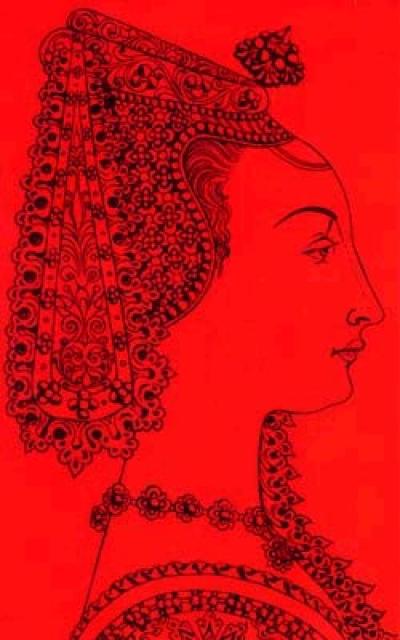
Lucrezia Borgia
 Italy
Lucrezia Borgia was a Renaissance noblewoman whose public image was shaped by the power struggles of her family and by centuries of rumor. The daughter of Rodrigo Borgia—later Pope Alexander VI—and Vannozza Cattanei, she was repeatedly used to secure political alliances through marriage. At the court of Ferrara, however, she built a different reputation as a duchess, capable administrator and patron of writers and artists.
A Childhood Shaped by Politics
Born on 18 April 1480, Lucrezia grew up amid the ambitions of the Borgia family. She received an education in Italian and Spanish, along with instruction in Latin, music and courtly accomplishments. While still a child, she was promised in marriage to a series of noblemen as her father’s political plans shifted.
At thirteen, she married Giovanni Sforza, lord of Pesaro. The marriage was annulled in 1497 when the Borgias no longer needed the alliance. During the bitter dispute that followed, Sforza accused Lucrezia of incest with her father. The charge became one of the most enduring rumors about her, though historians have found no reliable evidence to support it.
In 1498, she married Alfonso of Aragon, a son of the king of Naples. The relationship appears to have been affectionate, but it was caught up in the Borgia family’s changing alliances. Alfonso was attacked in Rome in 1500 and later killed, widely believed to have been on the orders of Lucrezia’s brother Cesare. Her third marriage, to Alfonso d’Este, heir to the duchy of Ferrara, was arranged to secure a powerful alliance.
Duchess of Ferrara
Lucrezia arrived in Ferrara in 1502. Her early reputation preceded her, but she gradually won respect at the Este court. She gathered poets, scholars and musicians around her, corresponding with figures such as Pietro Bembo and supporting the cultural life of the city. She also took part in government, presiding over petitions from residents and acting as regent while her husband was away.
Her years in Ferrara were marked by family losses, difficult pregnancies and a turn toward religious devotion. Despite the constraints placed on women in dynastic politics, she became more than a diplomatic bargaining piece: she exercised authority, cultivated relationships and helped shape the court’s public life.
The Legend and the Record
Lucrezia’s reputation as a poisoner and sexual conspirator owes much to hostile political gossip and later works of fiction, especially Victor Hugo’s 1833 play and Donizetti’s opera. Modern historical research has challenged the melodramatic image, particularly the repeated incest allegations, which lack credible proof. She died in Ferrara on 24 June 1519, after giving birth to her final child. Her life remains a striking example of how a woman caught inside a powerful family’s political machinery could still build influence and a lasting cultural legacy.


