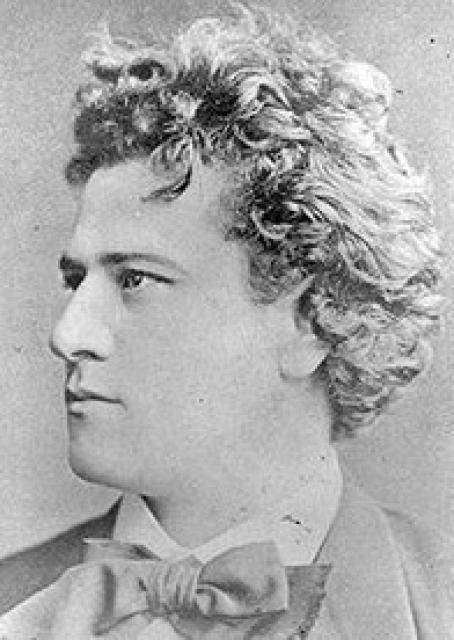
Ludwig Barnay
 Germany
- Ludwig Barnay: A Legendary German Actor
- Early Career and Recognition
- Artistic Maturity and Touring
- Directorial Roles and Theater Foundations
- Later Career and Legacy
- Signature Roles and Recognition
Ludwig Barnay: A Legendary German Actor
Early Life and TrainingLudwig Barnay, born in Germany, received his stage training under the renowned actor Adolf Sonnenthal. In 1860, he made his debut under the stage name Lacroix with a traveling theater in Trautenau, Bohemia.
Early Career and Recognition
Initially performing in smaller towns, Barnay gained recognition in 1861 when he joined the German Theater in Budapest. He subsequently performed in Graz, and in 1863, established himself as a leading dramatic lover at the Mainz Theater. His performances in Vienna's Burgtheater and Prague garnered critical acclaim, leading to an engagement with the Riga City Theater in 1864.
Artistic Maturity and Touring
Returning to Mainz in 1865, Barnay continued to refine his skills in Leipzig and Weimar. From 1870 to 1875, he performed at the Frankfurt City Theater. Notably, in 1874, he joined the touring Meiningen Theater in Berlin, where he portrayed Antony in Shakespeare's "Julius Caesar."
Directorial Roles and Theater Foundations
By 1880, Barnay had risen to the position of director of the Hamburg City Theater. He then embarked on extensive European tours with the Meiningen Court Theater, including performances in the United States in 1882 and St. Petersburg in 1885. In 1883, he became a shareholder of the Deutsches Theater in Berlin, but left a year later. In 1888, he founded the Berlin Theater, serving as its director until 1894.
Later Career and Legacy
From 1897 onwards, Barnay graced the stage of the Wiesbaden Theater. Between 1906 and 1908, he served as Intendant (director) of the Royal Theater in Berlin, followed by a tenure as Intendant of the Court Theater in Hanover from 1908 to 1912. Throughout his career, from 1871 until his death, Barnay presided over the "Society of German Theater Members," which he had established.
Signature Roles and Recognition
Barnay's most notable performances included Essex in Laube's "Count Essex," Egmont in Goethe's work, Uriel Acosta in Gutzkow's "Uriel Acosta," Antony in Shakespeare's "Antony and Cleopatra," King Lear, Hamlet, Othello, William Tell in Schiller's work, Wallenstein in Schiller's "Death of Wallenstein," Keon in Dumas' play, Holofernes in Nestroy's "Judith and Holofernes," and Count Waldemar in Gustav Freytag's work.