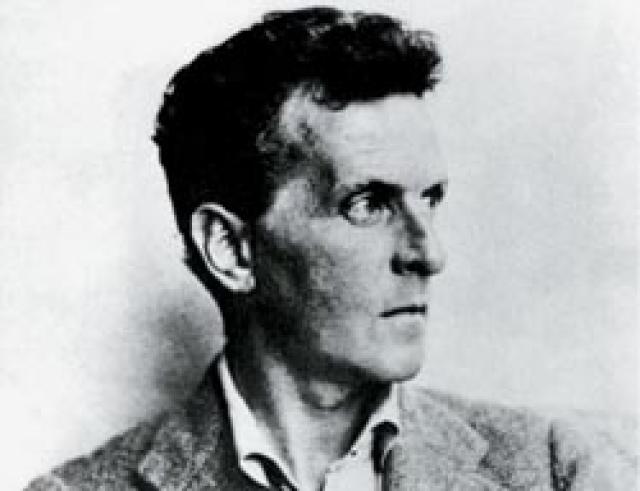
Ludwig Wittgenstein
 Austria
Ludwig Wittgenstein: The Early Years
Ludwig Wittgenstein was born in Vienna, Austria on April 26, 1889. He was one of the most influential philosophers of the 20th century. After studying in Berlin for several years, Wittgenstein interned at the University of Manchester in 1908, where he focused on engineering and technical device development.
The Logical Tractatus
In 1911, Wittgenstein began working extensively on issues of logic at Cambridge University with Bertrand Russell. One of his early breakthroughs was discovering the tautological nature of logical truths. In 1914, with the outbreak of World War I, Wittgenstein volunteered for the Austrian army. While serving at the front, he continued to ponder logical and philosophical problems. In 1918, he completed work on his seminal book, the Logisch-Philosophische Abhandlung (Logical-Philosophical Treatise), published in 1921 in German and 1922 in English.
The Tractatus is widely regarded as an original and significant work. According to one of its central ideas, the world's substance consists of "simple objects" that form facts by entering into various combinations with one another. "Elementary propositions" are made up of "names," each of which denotes a simple object. The combination of names denotes or "pictures" a possible combination of corresponding objects, in other words, a possible fact. The depiction, picture, or thought of a possible fact is a "thought." Everything that is thinkable is possible; the negation of the thinkable is also thinkable and possible. Since a certain possible combination of names represents a possible combination of objects, the logical form of the picture and the logical form of reality are identical. Thinking is accessible to sense perception because it is expressed in language propositions. By writing down all true elementary propositions, we could describe the world completely.
Although reality as a whole can be represented in propositions, no proposition can represent the commonality it must have with reality for the proposition to represent reality, namely, the logical form of the picture and reality. The logical form cannot be described in propositions; it shows itself in every proposition. The commonality that is necessarily present in thinking, language, and reality cannot be said. Elementary propositions depict contingent states of affairs in the world, which are logically independent of each other and have possible alternatives. The impossible and the inexpressible are the same. That which cannot be said includes the subject matter of logic, ethics, aesthetics, religion, and even philosophy.
The Later Years
After the war, Wittgenstein did not engage in philosophy for a decade. He spent several years teaching at a rural school in Lower Austria, then worked as a gardener's assistant in a monastery. In 1929, he unexpectedly returned to Cambridge and resumed his philosophical inquiries. In 1939, Wittgenstein was appointed to the chair of philosophy at Cambridge University, which he held until 1947. He continued his research until his death in Cambridge on April 29, 1951.
After 1929, Wittgenstein wrote prolifically. His major work of this period is the Philosophical Investigations (Philosophische Untersuchungen), published posthumously in 1953. Other writings by Wittgenstein also have been edited and published, including Remarks on the Foundations of Mathematics (1956), The Blue and Brown Books (1958), Philosophical Remarks (1964), Zettel (1967), and Mixed Remarks (1977). These books, along with the lectures and discussions in which he participated, have had a profound influence on contemporary philosophy.
Much of the Tractatus came under attack by Wittgenstein himself, who rejected the concepts of "simple objects," "names," "elementary propositions," "analysis," and thought as a "picture." The primary assumption of the Tractatus, that there is an underlying essence or nature of thinking, language, and representation, was now seen by Wittgenstein as a grave mistake. There are many different forms of thinking, language, and representation, and it is unwarranted and unrealistic to suppose that a single common nature underlies these forms.
Another important idea is that of "language as a game" (or "language game"), a kind of human activity, practice, in which words play a particular role. For example, "thinking" refers to a wide range of different activities and forms it can take. Consequently, we should abandon the assumption that the word "thinking" denotes the same thing in all of its various contexts. The same is true for other psychological concepts: "following a rule," "expectation," "perception," "meaning," "remembering." The following passage from the Philosophical Investigations provides a good example of a "language game" and Wittgenstein's style of thinking from this period:
>"182. The grammar of 'to fit', 'to be able to', and 'to understand'. Tasks: 1) When do we say that a cylinder z fits the hollow cylinder h? Only when z is put into h? 2) We sometimes say that z has ceased to fit h at such-and-such a time. What criteria do we use in such cases for deciding that this has happened at that time? 3) What counts as the criterion for a change in weight at a particular time, if the body was not lying on the scales at that time? 4) Yesterday I knew a poem by heart; today I no longer know it. In what sorts of cases does it make sense to ask: 'When did I stop knowing it by heart?' 5) Someone asks me: 'Can you lift this weight?' I answer 'Yes.' Then he says: 'Lift it!' – and I can't. In what circumstances might my words: 'When I said "Yes" I could, but now I can't' be considered a sufficient justification?"
The criteria that we adopt for "to fit," "to be able to," "to understand" are not at all as simple as they might appear at first sight. In other words, the game with these words – their use in the language-game carried out with them – is much more complicated – and the role of these words in our language is different – than we are inclined to think. (It is this role that needs to be understood, in order to dissolve philosophical paradoxes.)"
Wittgenstein observed that in philosophy, "there is a constant temptation to want to understand the meaning of the word by looking at it itself... As if the meaning were some sort of vapour that the word emits." His writings subject many terms that have caused philosophers confusion, such as "knowledge," "certainty," and "justification," to a thorough examination. Particular attention is given to describing the practices and modes of activity in everyday life in which these terms are encountered. We see what knowledge, certainty, and justification mean in these practical situations and how they mean something different when circumstances change. Language should be studied when it is working, not when it is "on holiday."