Luigi Boccherini
 Italy
Italy- Biography of Luigi Rodolfo Boccherini
- Early Musical Career
- Return to Lucca and Success
- Court Composer and Later Years
Biography of Luigi Rodolfo Boccherini
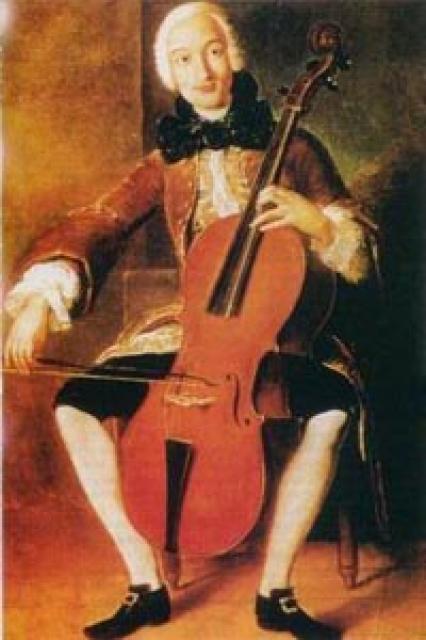
Luigi Rodolfo Boccherini was an Italian composer who developed the musical form of the string quartet. He was born on February 19, 1743, in the small Italian town of Lucca, into a musical family. His father was a professional double bassist and began teaching young Luigi to play the cello at a very early age. Boccherini's father had to give up his pride as a musician because the double bass was simply too large for the young child.
Early Musical Career
Boccherini briefly played in the professional orchestra of another Italian composer, Giovanni Battista Sammartini, before traveling to Vienna at the age of fourteen. It was in Vienna that he first heard the music of Franz Joseph Haydn. Haydn's musical influence on Boccherini was so profound that music enthusiasts of the time often referred to Boccherini as "Haydn's wife". However, Boccherini's exquisite sense of sound and structure, combined with his low attention to thematic material, set him apart from Haydn. As the essence of his music was based more on sound than on thoughts, Boccherini can be considered an impressionist of his time.
Return to Lucca and Success
In 1747, Boccherini was sent to Rome to perfect his performance technique and, after a year of study, returned to his hometown of Lucca as a virtuoso cellist. At the same time, Boccherini revealed himself as a composer, giving a separate concert of his works together with violinist Filippo Manfredi. The success of the concert was so great that they decided to tour all the major cities of France, arriving in Paris in 1786, where he was hailed as a great virtuoso. His works, which include 91 string quartets, 30 symphonies, 137 quintets for various combinations of strings, as well as numerous trios, piano quintets, sextets, sonatas, two operas, and a mass, were widely published and became extraordinarily popular.
Court Composer and Later Years
In 1769, Infante Don Luis invited Boccherini to the court in Madrid as a chamber music composer. He remained there until the Infante's death in 1789 when he was appointed court composer by Friedrich Wilhelm II of Prussia. Boccherini returned to Madrid in 1797, where his deteriorating health forced him to give up playing the cello permanently. The death of two of his sons also dampened his desire for composition. In 1800, he found himself under the patronage of Lucien Bonaparte, Napoleon's brother, and later the French ambassador in Madrid. He remained in this position until he was ultimately forgotten, and he died on May 28, 1805.