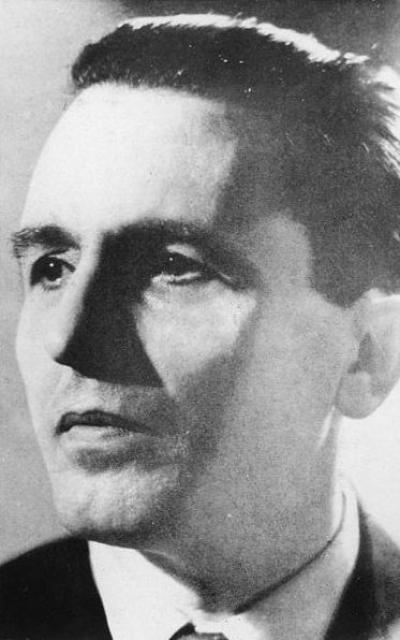
Luis Carlos Prestes
 Brazil
Biography of Luis Carlos Prestes
Luis Carlos Prestes was a prominent figure in the Brazilian communist movement. He was born into a military family and received a higher education in the military. He served as an engineer-captain in the Brazilian army from 1918 to 1924.
Prestes was actively involved in revolutionary work among soldiers and officers during this time. From 1924 to 1927, he led the Columna Prestes, which waged armed struggle against the "old republic." He went into exile in Bolivia, Argentina, and Uruguay from 1927 to 1931, where he had close ties with communist parties in these countries and the South American Bureau of the Executive Committee of the Communist International.
Upon his return to Brazil, Prestes became a member of the Brazilian Communist Party (BCP) in 1934. He was elected to the Executive Committee of the Communist International at the 7th Congress in 1935. In the same year, he organized a rebellion against the dictatorship of Getúlio Vargas and became the leader of the revolutionary army of the National Liberation Alliance, serving as its honorary chairman.
However, after the uprising was suppressed, Prestes was arrested and imprisoned from 1936 to 1945. His wife, Olga Benario-Prestes, a German Jew, was deported to Germany while pregnant and died in a concentration camp. However, Prestes' mother managed to save their granddaughter Anita, who later became a historian.
Despite being released by Vargas in 1945, Prestes did not change his opinion of him. He described Vargas as opportunistic, switching between being a fascist or a democrat based on what was politically advantageous at the time.
Prestes became a senator in 1945, but two years later, a military coup led to the banning of the communist party. From 1947 to 1958, he operated underground due to the party's prohibition. He returned to legal politics only after the democratic election of progressive President João Goulart (1961-1964).
However, when another military coup took place in 1964, Prestes once again found himself operating underground. He was sentenced to 14 years in absentia. Meanwhile, a split occurred within the Communist Party, with Maoists continuing armed struggle while Prestes, who had become the leader of the Communist Party of Brazil, moved to Moscow with his family in 1970. He returned to Brazil a decade later after an amnesty but did not engage in active political activity.


