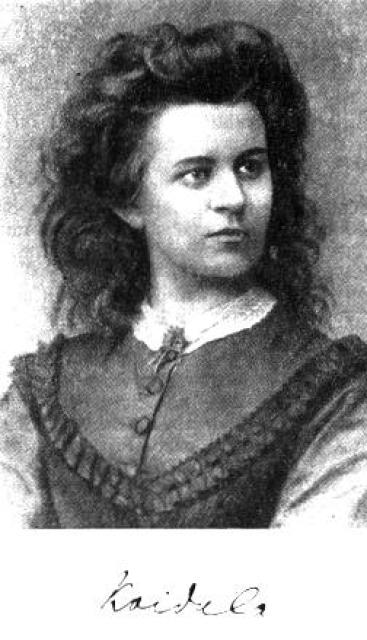
Lydia Koidula
 Estonia
- Biography of Lydia Koidula
- Early Career
- Marriage and Exile
- Literary Achievements
- Dramatic Works and Legacy
Biography of Lydia Koidula
Lydia Koidula, an Estonian poet, prose writer, and pioneer of Estonian drama, was born on December 24, 1843, in Vändra, Estonia. She was the daughter of journalist and enlightener J. V. Jannsen. From a young age, Koidula assisted her father in the publication of the newspaper "Pernu Postimees," where she translated and adapted literary works.
Early Career
Koidula began writing her own poetry in her teenage years, initially in German. She quickly gained popularity as a poet and became known for her patriotic and civic-minded works. Her poetry resonated deeply with the awakening Estonian nation, and she was often referred to as the "Nightingale of Lake Emajõgi" after her poetry collection of the same name, published in 1867.
Marriage and Exile
In 1873, Koidula married doctor E. Michelson and was forced to live in Kronstadt, where her husband served as a military doctor. Despite frequent visits to Estonia, Koidula deeply felt the separation from her homeland. Tragically, her life was cut short by illness, and she passed away in Kronstadt.
Literary Achievements
Koidula's most significant contribution to Estonian literature was in poetry. Her romantic and emotive lyrics expressed passionate empathy for the hardships faced by the Estonian people, a deep love for her homeland, and a desire to aid her compatriots. She meticulously honed her poetic technique, paving the way for future generations of Estonian poets. Koidula also ventured into prose, primarily through her work for newspapers, where she adapted and translated literary works for Estonian readers.
Dramatic Works and Legacy
Koidula made a significant impact on Estonian drama. Her first play, "The Nephew from Saaremaa," written in 1870, was based on a plot by German dramatist T. Kerner. However, her subsequent comedies, such as "The Matchmakers" (1870) and "Such a Dude, or a Hundred Bags of Salt" (1872), were entirely original and marked the beginning of Estonian theater.
Koidula's short but prolific and dramatic life, her popularity among contemporary readers, and her active participation in cultural initiatives gradually turned her into a legend. Her name has been immortalized in literature, with several works dedicated to her and her family, as well as numerous poems written by renowned Estonian poets. A memorial museum and monument were established in Parnu, Estonia, in her honor. Her poems have been translated into Russian and included in poetry anthologies.


