Lysippos
Lysippos was one of the most celebrated sculptors of ancient Greece, active in the fourth century BCE. Born in Sicyon in the Peloponnese, he became known for bronze figures that presented the human body with new energy and proportions. Ancient writers also remembered him as the favored portrait sculptor of Alexander the Great, whose image he helped shape for generations.
Life and Career
Little is known about Lysippos’s personal life, and his dates remain uncertain. He came from Sicyon, a city with a strong artistic tradition, and worked during a period when Greek sculpture was moving beyond the balanced ideal associated with earlier masters such as Polykleitos.
Ancient accounts say that Lysippos was largely self-taught and began as a metalworker. He became a prolific sculptor, producing statues of athletes, gods and rulers. His workshop and reputation grew alongside the expanding Macedonian kingdom, and he became closely associated with the court of Philip II and, especially, Alexander.
A New Sculptural Style
Lysippos’s style was described as more slender and dynamic than the earlier classical canon. The heads of his figures were smaller, their bodies leaner, and their poses often invited viewers to look from several angles. These choices could make a figure seem taller and more animated, and they helped open the way for the more expressive art of the Hellenistic age.
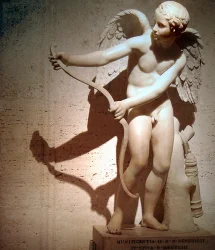
Among the works associated with him is the Apoxyomenos, or “Scraper,” depicting an athlete cleaning oil and dust from his body after exercise. The bronze original is lost, but a Roman marble copy in the Vatican Museums gives a sense of the composition. Other works, including portraits of Alexander and statues of Heracles, are known largely through ancient descriptions, copies and later attributions, so the precise extent of Lysippos’s surviving oeuvre remains debated.
Portraitist of Alexander
Lysippos was celebrated for his portraits of Alexander the Great. Ancient writers report that Alexander preferred Lysippos for sculpture, just as he favored the painter Apelles and gem cutter Pyrgoteles for other forms of portraiture. The sculptures sought to capture the king’s distinctive appearance and forceful character, helping establish a recognizable image of the Macedonian ruler.
Legacy
No securely identified original bronze by Lysippos survives, and much of what is attributed to him must be reconstructed from Roman copies and written testimony. Even so, ancient critics regarded him as a major innovator, and his influence can be traced in later Greek and Roman sculpture. His approach to proportion, movement and individualized portraiture made him one of the key artists bridging classical Greek art and the Hellenistic world.