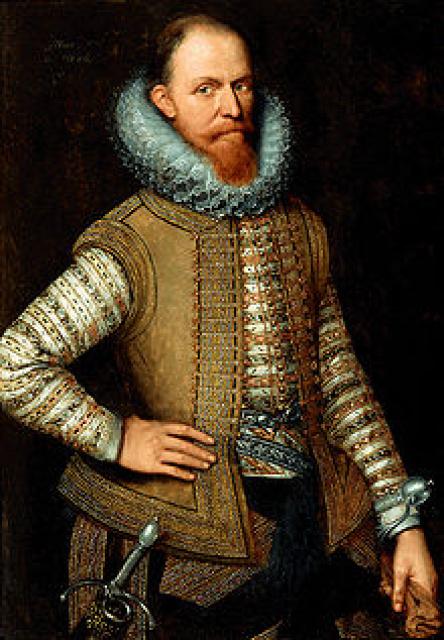
Magnus Heinason
 Denmark
- The Early Life of Magnus Heinesen
- Maritime Experience:
- From Merchant Captain to Naval Officer
- Attack by Pirates and Vow of Revenge:
- Service in the Dutch Navy:
- The Royal Monopoly and Magnus's Trade Ambitions
- Petitioning the King and a Special Permit:
- Magnus's Rise and Fall
- Privateering Commission:
- Magnus's Execution and Legacy
- Magnus's Marriages and Family
The Early Life of Magnus Heinesen
Birth and Family:Magnus Heinesen, the son of Heine Havreki, a Norwegian priest, and Gyri Arnbjørnsdatter, a member of a wealthy and powerful clan, was born in 1545 in the village of Oyndarfjørður on the island of Eysturoy, in the Faroe Islands.
Maritime Experience:
As a priest, Havreki traveled extensively by sea between the islands, and Magnus often accompanied him on these journeys. This exposure to maritime life instilled in Magnus a love of the sea and gave him valuable experience that would shape his future endeavors. Notably, some of his most renowned exploits occurred in these same waters.
From Merchant Captain to Naval Officer
Early Career:When Magnus was around 17 or 18, his father was transferred to Norway. The family moved to Bergen, where Magnus pursued his ambition of becoming a sailor, aided by his father's connections. As a young man, he became the captain of a merchant vessel on the route from Bergen to the Faroe Islands, a route his father had sailed for many years.
Attack by Pirates and Vow of Revenge:
During his third voyage, Magnus' ship was attacked by pirates. The details of the encounter are lost to history, but upon Magnus' return to Bergen, he was ridiculed for surrendering without a fight. Deeply wounded, Magnus vowed to avenge the insult.
Service in the Dutch Navy:
Leaving Norway, Magnus joined the naval forces of the Netherlands. Little is known about this period of his life, but he returned to Denmark approximately 10 years later with commendations from Prince Maurice of Nassau and his father, William I, for his bravery in naval battles against Spanish rule.
The Royal Monopoly and Magnus's Trade Ambitions
Dreams Crushed:It is likely that Magnus hoped to reclaim his job as a merchant captain on his former route, but this time as the owner of his own vessel. However, his dreams were dashed when the Crown established a royal monopoly over trade with the islands in 1578, the year Magnus returned home.
Petitioning the King and a Special Permit:
Undeterred, Magnus traveled to Denmark to petition the king to lift the trade monopoly on the Faroe Islands. While his plea was denied, Magnus managed to persuade the king to grant him a special permit for a single voyage to the islands, citing debts owed to him there. The king made Magnus promise that he would not engage in trade with the Faroese. Magnus agreed, but his plans would have hardly pleased the king had he known about them.
Magnus's Rise and Fall
Leading a Revolt against the Monopoly:Through family connections and his familiarity with the islands' leading figures, Magnus managed to incite a small-scale revolt against the trade monopoly. The Faroese demanded that the king appoint an official to oversee law and order, and it so happened that Magnus, who had befriended King Frederick II, became the commander of the ships that carried out all trade.
Privateering Commission:
Magnus was later granted a privateering commission, giving him the right to sink or capture pirate ships and English merchant vessels. This brief period of success, however, would be his downfall, as Magnus had made a powerful enemy in the king's treasurer, Christoffer Valkendorff.
Magnus's Execution and Legacy
Construction of Torun's Port's Defense:Magnus built the first fortifications in Tórshavn, the capital of the Faroe Islands. However, when King Frederick II died in April 1588, Magnus lost his friendship and protection. He was captured and sent to Copenhagen on the orders of Valkendorff, who now held sway in Denmark. Magnus was tried and sentenced to death by beheading on January 18, 1589. His remains were taken to Ørslev Monastery and buried, where they lie to this day.
Magnus's Marriages and Family
Three Engagements and Two Marriages:Magnus was betrothed three times and married twice. In 1560, he had a son, Rasmus Magnussen (1560-1670), with a Faroese woman named Kollfina. Rasmus reportedly fathered a child at the age of 103. In 1580, Magnus met a young Norwegian noblewoman, Margrethe Gyntersberg (1565-1589). Margrethe gave birth to a child who died in infancy. They did not marry, as Margrethe accused Magnus of rape. However, her noble family demanded that Magnus marry her younger sister, Sophie (1566-1607). They wed in 1582 and had a daughter, Elsebeth Magnusdatter (1584-1645).