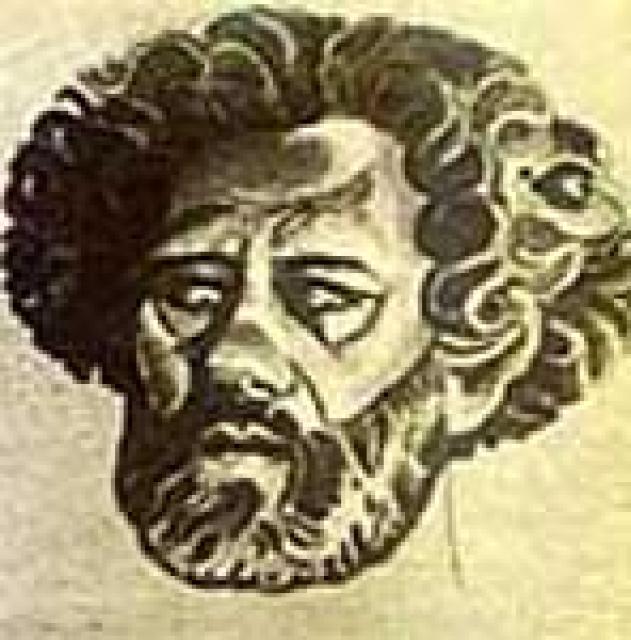
Maksimilian Voloshin
- Maximillian Voloshin: A Multifaceted Genius
- Early Life and Education
- Exiled and the Embrace of European Culture
- Return to Russia and Literary Accomplishments
- Mystic Explorations and Literary Hoaxes
- World War I and the Transformation of His Poetry
- Revolution and "Neutrality"
- Artistic Output and Later Years
- Legacy and Death
Maximillian Voloshin: A Multifaceted Genius
Maximillian Alexandrovich Voloshin (born Kirienko-Voloshin) was a Russian poet, translator, landscape artist, and art and literary critic. Born in Kiev on May 28, 1877, to a family with diverse cultural heritage, Voloshin's education and experiences shaped him into a profoundly erudite and multifaceted individual.
Early Life and Education
At a young age, Voloshin experienced both the loss of his father and a relocation to Crimea with his mother. In his formative years, he developed a deep connection to the landscapes of Feodosia and Koktebel, a bond that would influence his artistic and literary pursuits throughout his life. Voloshin's youthful passion for writing manifested itself through his early translations of Heinrich Heine and his own poetic endeavors.
Exiled and the Embrace of European Culture
Enrolling in law school at the Moscow University, Voloshin became deeply involved in student activism. His participation in protests led to his expulsion and a subsequent exile to Central Asia. It was during this time that Voloshin resolved to pursue his true calling in literature and art, embarking on a journey to the West.
In Paris, the former Moscow student underwent a profound transformation. He immersed himself in European culture, becoming an avid art and literature connoisseur. Voloshin's political views shifted towards anarchism, while his literary style embraced symbolism.
Return to Russia and Literary Accomplishments
In 1903, Voloshin returned to Russia, establishing connections with literary luminaries such as Valery Bryusov and Alexander Blok. His first article was published in 1900, and his first collection of poetry in 1910. Voloshin's natural talent, wit, and distinctive appearance contributed to his popularity among intellectuals of the "Silver Age." His home in Koktebel became a hub for poets, philosophers, and artists.
Mystic Explorations and Literary Hoaxes
Voloshin's interests extended beyond literature to embrace mysticism and religious philosophies. He became involved with Buddhism, occultism, and theosophy. In 1909, he orchestrated a literary hoax with the young poetess Elizaveta Dmitrieva, creating the pseudonym "Cherubina de Gabriak."
World War I and the Transformation of His Poetry
The outbreak of World War I marked a significant shift in Voloshin's poetic voice. His anti-war sentiments became evident in works such as "Anno mundi ardentis" (1915). Returning to Russia in 1916, Voloshin's focus turned to the plight of his homeland, and his poetry took on a deep patriotic tone.
Revolution and "Neutrality"
The Russian Revolution presented Voloshin with a profound historical challenge. Despite his earlier sympathies for anarchism, he recognized the inevitability of the revolution. During the civil war, Voloshin maintained a stance of neutrality, providing aid to individuals in need regardless of their political affiliations.
Artistic Output and Later Years
In the post-revolutionary period, Voloshin shifted his focus to watercolor painting and exhibited his works in various cities. He continued to write philosophical poems, such as "The Ways of Cain" (1921-1923) and "Russia" (1924). With the support of his second wife, Maria Zabolotskaya, Voloshin transformed his home in Koktebel into a haven for writers and artists.
Legacy and Death
In 1931, Voloshin bequeathed his house to the Union of Writers. He passed away from pneumonia in Koktebel on August 11, 1932. In accordance with his wishes, he was laid to rest on the highest hill of Koktebel Bay, known as Kucuk-Yenishar. Maximillian Voloshin remains a revered figure in Russian literature, art, and thought, leaving behind a remarkable legacy of work and intellectual inquiry.




