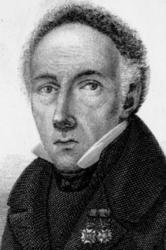
Manlius Boetius
 Italy
Italy- Early Life and Education
- Political Involvement
- Allegations and Execution
- Intellectual Contributions
- "The Consolation of Philosophy"
- Theological Writings
- Legacy
Early Life and Education
Boethius, whose full name was Anicius Manlius Torquatus Severinus Boethius, was born around 475 CE into a prominent Roman family that had amassed immense wealth and influence during the empire's reign. After his father's passing, Boethius was adopted into the household of his wealthy relative, Memmius Symmachus, whose daughter he later married.
Political Involvement
Boethius was actively involved in politics. Following the conquest of Italy by King Theodoric the Great of the Ostrogoths in 493 CE, Boethius and other patricians offered their services to the king. He quickly gained Theodoric's trust and was appointed senator, patrician, and consul in 510 CE. Later, he was elevated to the prestigious position of magister officiorum, which placed him within the king's inner circle.
Allegations and Execution
This high-ranking position proved to be Boethius's downfall. As a Roman, he used his influence to protect the interests of Roman citizens against abuses by Ostrogothic officials. Accused of treason, he was imprisoned in Pavia for two years, where he penned his famous work "The Consolation of Philosophy." In 524 CE, Boethius was executed.
Intellectual Contributions
Boethius was equally proficient in Latin and Greek. He translated Aristotle's works into Latin and provided accompanying commentaries, including the extant translations of "Categories" and "On Interpretation." He also translated Porphyry's "Isagoge." Of his own works, two of four textbooks for schools have survived: "On the Study of Arithmetic" and "On the Study of Music." Other writings on logic that have reached us include "Introduction to Categorical Syllogisms," "On Hypothetical Syllogisms," "On Division," and "On the Distinction of Arguments Based on Common Opinions."
"The Consolation of Philosophy"
Boethius's masterpiece is "The Consolation of Philosophy," a five-book work that has been translated into numerous European languages. This dialogue, containing prose and 39 verse insertions, depicts a prisoner consoling himself with the help of Lady Philosophy. It harmonizes elements of Stoic, Christian, and Neoplatonic philosophy.
Theological Writings
Boethius also authored theological treatises, such as "How the Trinity Is One God, Not Three" and "On the Catholic Faith." He is widely regarded as the last Roman and the first scholastic, greatly influencing the development of medieval science and philosophy.
Legacy
Through his translations, Boethius introduced Aristotle's works to the Latin West, sparking the medieval debate on universals that played a pivotal role in scholasticism. His meticulous approach to translation, emphasizing precision and clarity, shaped the thought processes of medieval scholars.