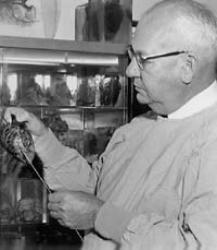
Marcel Elyakim
 Israel
- Early Life and Education
- Immigration to Israel and Medical Career
- Academic and Research Contributions
- Honours and Legacy
Early Life and Education
Eliakim Eliakim, an Israeli physician, was born in Plovdiv, Bulgaria. Tragedy struck his life at a young age when his mother passed away when he was seven. In 1939, his father was deported to France, where he succumbed to illness two years later.
Eliakim found solace in the support of his father's family. He excelled in his studies, completing his education at a French school in his hometown and the American College in Sofia. Driven by a passion for medicine, he commenced his medical education at the University of Sofia in 1944 and graduated in 1949.
Immigration to Israel and Medical Career
With the establishment of the State of Israel in 1949, Eliakim immigrated to his new homeland. He completed his medical training at the Hebrew University of Jerusalem in 1952, graduating with first-class honors. During his studies, he selflessly volunteered as a physician at the Rosh Ha'ayin transit camp.
Eliakim's military service from 1952 to 1954 included roles in the Scientific Corps and the Biological Institute of Ness Ziona. Concurrently, he began his medical practice in the internal medicine department of the Hadassah University Hospital under the esteemed Professor Moshe Rachmilevich.
Academic and Research Contributions
In 1960, Eliakim pursued a doctorate in pharmacology at the University of Pennsylvania. Upon his return, he joined the faculty of the Hebrew University of Jerusalem as a senior lecturer in 1960, became an associate professor in 1963, and attained the rank of full professorship in 1969.
From 1960 to 1969, Eliakim served as the chief physician at Hadassah University Hospital and completed his doctoral dissertation. Recognized for his expertise, he was certified as a specialist in internal medicine and cardiology in 1963.
Eliakim's academic leadership extended beyond the classroom. In 1964, he founded Israel's first school for postgraduate medical education, in collaboration with the Hebrew University, Hadassah Hospital, and the Clalit Health Fund. He subsequently headed the Institute for Postgraduate Education from 1970 to 1976.
Eliakim's research centered on cardiovascular and liver diseases. He was among the first to discover a cure for Mediterranean fever. His contributions to the field of medicine were acknowledged by several prestigious awards, including the Ben Ari Prize in Internal Medicine (1950), the Fredgrin Prize for cardiovascular field studies (1952), and the Zwilling Prize for his outstanding contribution to the journal "Medicine" (1952).
Honours and Legacy
Eliakim's lifetime of dedication was recognized with the Hadassah University Award in 1987, the award for reducing mortality in pregnant women (1997), the award for contributing to the study of Mediterranean fever (1997), the Jerusalem Yakir Prize (1998), and the pinnacle of his career, the Israel Prize in Medicine in 2001.
Eliakim's legacy lives on through his numerous publications, including over 200 articles and several books. Notably, he authored "Recurrent Polyserositis" and edited three other books. He also left a lasting impact on countless students, including the renowned Professor Reuven Wiescofer.
Eliakim Eliakim passed away in 2013, leaving behind a remarkable legacy and the respect of the medical community. He was buried at the Har HaMenuchot cemetery, survived by his two physician sons, who carry on his tradition of excellence in medicine.