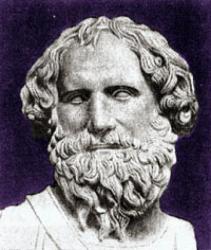
Marchello Malpighi
 Italy
ItalyBiography of Marcello Malpighi
Marcello Malpighi was an Italian physician, physiologist, and anatomist. He graduated from the University of Bologna in 1653, earning a degree in medicine, and became a professor at the same university in 1656. He served as a professor of medicine at the University of Pisa (1656-1659), University of Bologna (1660-1662, 1666-1691), and University of Messina (1662). In 1692, he became the personal physician to Pope Innocent XII in Rome and concurrently held the position of professor at the Papal College.
Contributions
Malpighi's major contributions were in the field of microscopic anatomy of animals and plants. He was the first scientist to use a microscope to study the structure of the brain, retina, nerves, spleen, kidneys, and more. Using a microscope with 180x magnification, he described the network of capillaries that connect arteries with veins in 1661, a discovery that eluded William Harvey, who had previously discovered blood circulation. In 1666, he observed the renal tubules and formulated early ideas about urine formation. Malpighi is considered the founder of invertebrate anatomy, with his work on the silkworm in his treatise "Dissertatio epistolica de bombyce" (1669). This work earned him membership in the Royal Society of London.
Another significant body of Malpighi's work focused on the fine structure of plants. He extensively described the microstructure of leaves, stems, roots, buds, and flowers. He discovered vascular elements in the stem and established the presence of upward and downward streams of substances in plants. His botanical studies also encompassed the external anatomy of plants, specifically the organs of reproduction and leaves. Malpighi authored a two-volume work titled "Anatome Plantarum" (1675-1679). Many organs and structures discovered by him bear his name, such as Malpighian bodies (in the kidneys and spleen), Malpighian layer (in the skin), and Malpighian vessels.
Overall, Marcello Malpighi's groundbreaking research and discoveries in the fields of anatomy and physiology have solidified his place as one of the most influential figures in the history of medical science.