Marino Falier
 Italy
Italy- Marino Faliero: The 55th Doge of Venice
- Election as Doge and Attempted Coup d'État
- Trial and Execution
- Legacy and Cultural Influence
Marino Faliero: The 55th Doge of Venice
Born into an ancient patrician family, Marino Faliero was a military leader, diplomat, and member of the Council of Ten. Throughout his life, he commanded Venetian forces at the Siege of Zara, defeated an 80,000-strong army of the Hungarian king, and captured Capod'Istria (present-day Koper) as commander of the fleet. He also served as podestà on the mainland and represented Venetian interests as an ambassador to Genoa and Rome.
Election as Doge and Attempted Coup d'État
In 1354, Faliero was elected Doge at the age of 80 while on a diplomatic mission in Rome. In 1355, he attempted a coup d'état to monopolize power. However, the members of the Council of Ten were aware of his plans and took swift action. The coup lacked the necessary support from the people and the aristocracy, and Faliero and his supporters were apprehended and brought to trial.
Trial and Execution
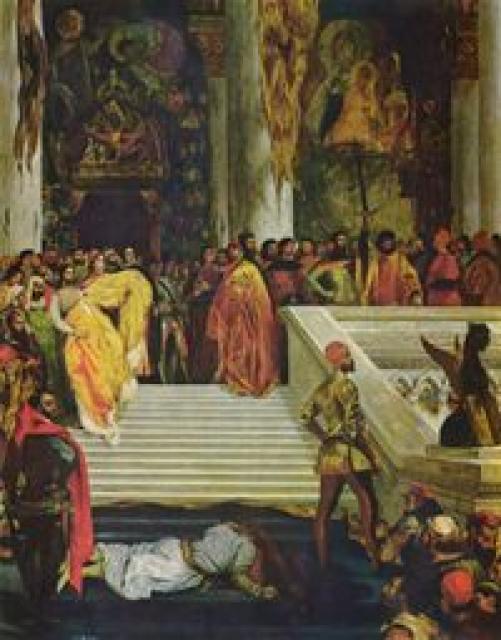
Faliero confessed to the charge of treason, and on April 17, he was sentenced to death. On April 18, he was executed: his head was severed and his body mutilated. Ten of his accomplices were hanged in the Doge's Palace.
Legacy and Cultural Influence
In 1365, a decree was issued erasing Faliero's name from the frieze in the Hall of the Grand Council that bore the names of all the doges. Instead, it was replaced with the inscription: "Here is the place of Marino Faliero, beheaded for the crimes he committed."
Faliero's story has captivated writers for centuries. George Gordon Byron dramatized it in his play "Marino Faliero, Doge of Venice" (1820). Algernon Charles Swinburne's play "Marino Faliero" (1885) also explored his history. Additionally, Gaetano Donizetti composed an opera based on Casimir Delavigne's play "Marino Faliero" (1835).