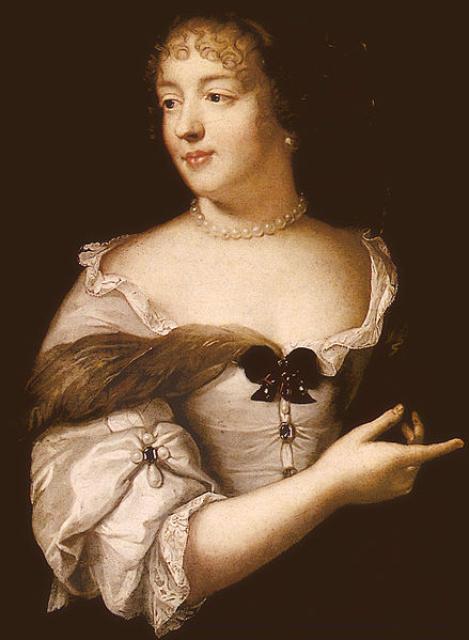
Marquise De Sevigne
 France
- Biography of Madame de Sévigné
- Marriage and Family
- Correspondence with Her Daughter
- Literary Contributions
- Legacy and Recognition
Biography of Madame de Sévigné
Marie de Rabutin-Chantal, Marquise de Sévigné, was a French aristocrat and writer, best known for her famous "Letters" and her contribution to French literature. She was born in Paris in 1626 to Celse Bénigne de Rabutin, Baron de Chantal. Her father died in battle a year after her birth, and she was raised by her grandfather and later her brother.
Marriage and Family
In 1644, Marie married Henri de Sévigné, the Marquis de Sévigné, who owned the Château de Rochers near Vitré. They had a daughter named Françoise in October 1646. Marie's famous letters were addressed to Françoise and provided a vivid account of the events happening in France, particularly at the court of Louis XIV. Two years later, Marie gave birth to a son named Charles. Unfortunately, in 1651, her husband was killed in a duel, and Marie dedicated herself to raising their children.
Correspondence with Her Daughter
Marie's daughter Françoise grew up and married François Adhémar de Monteil, Comte de Grignan, in 1669. They moved to Provence, leaving Marie in Paris. Marie deeply missed her daughter and began writing letters to her, which eventually became renowned for their elegant and engaging style. Her letters were filled with wit, humor, and precise observations of events and character descriptions.
Literary Contributions
Marie de Sévigné's letters provided a lively chronicle of the period in France, especially at the court of Louis XIV. She wrote about significant events such as the revocation of the Edict of Nantes, executions, and rebellions in Brittany. Additionally, her letters included commentary on weddings, scandals, and festivities, often resembling a social chronicle. Marie was well-read and sometimes discussed literature in her letters, offering her own personal opinions and witty criticism.
Legacy and Recognition
The correspondence between Marie and her daughter lasted for almost a quarter of a century, with an average of three to four letters exchanged per week. The first collection of Madame de Sévigné's letters was published in 1726, followed by a larger compilation of 772 letters in 1754. Subsequent editions included letters to other friends besides Françoise.
Marie de Sévigné passed away on April 17, 1696, at the château of her daughter. She was 70 years old at the time of her death and was buried in the Grignan church. During the French Revolution, her tomb and remains were damaged. In honor of the 300th anniversary of her death, the Sévigné Prize for the best publication of previously unpublished letters was established in France in 1996.
One of Madame de Sévigné's many aphorisms captures the essence of her literary style: "To understand how tedious we are in conversation, one only needs to remember how tedious others are when speaking to us."




