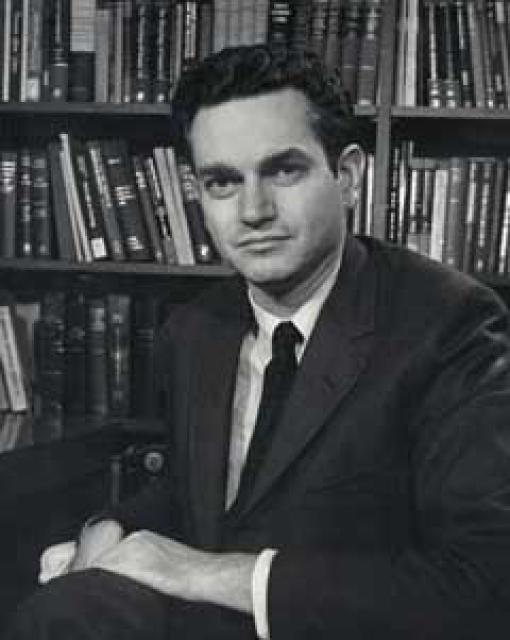
Marshall Nirenberg
 USA
USABiography of Marshall Warren Nirenberg
Marshall Warren Nirenberg was an American biochemist and geneticist, born on April 10, 1927, in New York. His family moved to Orlando, Florida in 1939. From a young age, Nirenberg developed an interest in zoology, so he enrolled in the University of Florida in Gainesville, majoring in zoology. In 1948, he obtained his bachelor's degree, followed by a master's degree in zoology in 1952. His master's thesis focused on the ecology and classification of caddisflies.
During this time, Nirenberg developed an interest in biochemistry and decided to continue his education at the University of Michigan. In 1957, he earned his Ph.D. in biochemistry under the guidance of Dr. James Hogg. His doctoral dissertation explored the possibility of hexose cleavage in ascites cancer cells.
After completing his Ph.D., Nirenberg received a postdoctoral fellowship from the American Cancer Society, which allowed him to train in the laboratories of Dr. DeWitt Stetten Jr. and Dr. William Jacoby at the National Institutes of Health from 1957 to 1959. In 1960, he received a grant from the U.S. Public Health Service to conduct research in the field of enzyme metabolism at the National Institutes of Health, under the leadership of Dr. Gordon Tompkins. During this time, Nirenberg continued his studies on deoxyribonucleic acid (DNA), ribonucleic acid (RNA), and proteins.
In 1962, Nirenberg became the head of the Biochemical Genetics Section at the National Institutes of Health and immediately embarked on a series of experiments aimed at deciphering the genetic code. His team successfully synthesized an RNA molecule containing only uracil and determined which protein synthesis it would trigger. They discovered that DNA contains four nitrogenous bases, and the genetic code is formed by triplets of these bases. Nirenberg's group synthesized all possible triplet sequences (64) and decoded the triplet codes for all 20 amino acids.
Their findings revealed that the correspondence between triplets and amino acids was not always one-to-one and that some amino acids were encoded by multiple triplets. Furthermore, they identified triplets that did not code for any known amino acids. Through additional experiments, Nirenberg and his colleagues determined the role of these triplets, which signaled the termination of the biosynthesis process in cells. They also identified the sequence of nitrogenous bases in each triplet.
The significance of their discovery cannot be overstated. Deciphering the genetic code opened up vast possibilities for studying inherited diseases and finding methods for their treatment. Building upon Nirenberg's work, Robert Holley and Har Gobind Khorana determined the nucleotide sequence of RNA.
In 1968, Nirenberg, Holley, and Khorana received the Nobel Prize in Physiology or Medicine "for their interpretation of the genetic code and its function in protein synthesis."
Throughout his career, Nirenberg received numerous awards and honors, including the Molecular Biology Award from the National Academy of Sciences in 1962, the Paul Lewis Award in Enzyme Chemistry from the American Chemical Society in 1964, the National Medal of Science from the Research Society in 1966, the Hildebrand Prize in 1967, the Charles Leopold Mayer Prize from the French Academy of Sciences in 1967, the Joseph Priestley Award in 1968, the Franklin Medal in 1968, the Louisa Gross Horwitz Prize from Columbia University in 1968, and the Lasker Award that he shared with Har Gobind Khorana in 1968.
Nirenberg received honorary doctorates from the University of Michigan, Yale University, the University of Chicago, the University of Windsor in Ontario, and Harvard University. He was a member of the American Academy of Arts and Sciences and the National Academy of Sciences.