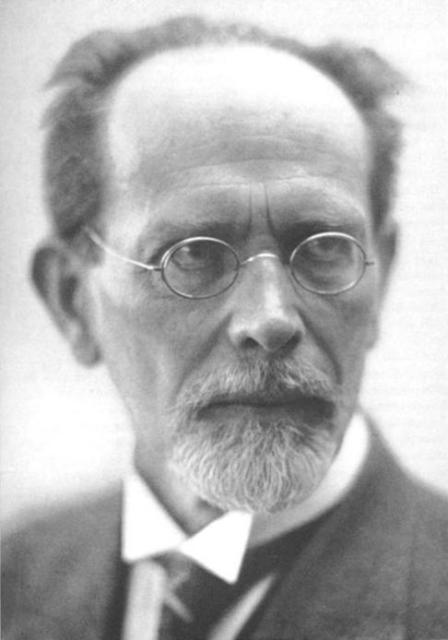
Martin Heidenhain
 Germany
- Martin Heidenhain: A Pioneer in Cytology and Histology
- Early Life and Career
- Tübingen Years: Professor and Researcher
- Challenging Cell Theory
- Theory of "Teilhaltigkeit"
Martin Heidenhain: A Pioneer in Cytology and Histology
Martin Heidenhain was born into a family with a strong scientific background. His father, Rudolf Heidenhain (1834-1897), was a renowned physiologist who converted to Christianity from Judaism.
Early Life and Career
Heidenhain began his work in anatomy as a prosector at the University of Würzburg's Department of Comparative Anatomy, Embryology, and Histology in 1894. In 1896, he made a significant contribution to microscopy by developing the hematoxylin staining technique, known as the Heidenhain stain.
Tübingen Years: Professor and Researcher
In 1917, Heidenhain moved to the University of Tübingen, where he became a professor of anatomy. His focus shifted towards the microscopic structure of cells. Using his staining technique, he discovered centrosomes in resting cells. He also authored authoritative works on the structure of the cell nucleus, cardiac muscle tissue, and muscle fibers.
Challenging Cell Theory
In 1907-1911, Heidenhain published his treatise "Plasma und Zelle," in which he criticized Rudolf Virchow's cell theory for its mechanistic interpretation. He argued that an organism's life functions cannot be reduced to the sum of its individual cells.
Theory of "Teilhaltigkeit"
Heidenhain proposed the theory of "Teilhaltigkeit," asserting that the organism is composed of systems of varying ranks, from the lowest to the highest. This theory, which he termed "synthetiology," sought to reconcile the organism's integrity with its structural components.