Martin Usborne
 Great Britain
- Biography of Martin Usborne
- Interest in the Human-Animal Relationship
- The Silence of Dogs in Cars
- Embodying Answers Through Dogs
Biography of Martin Usborne
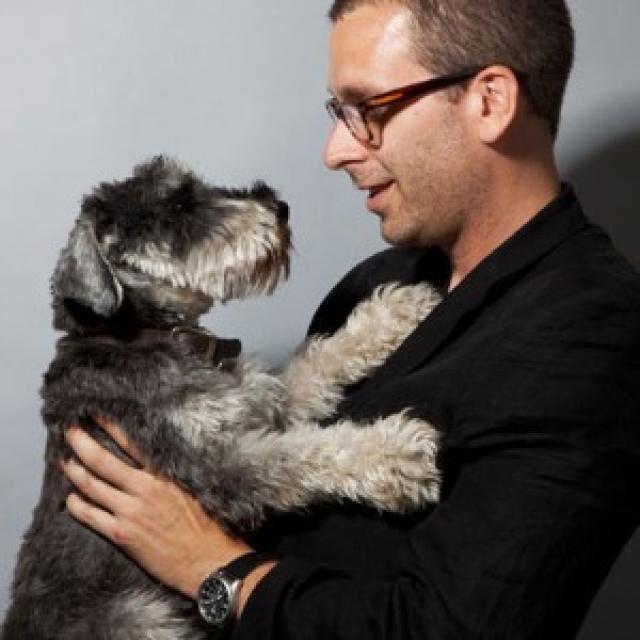
Martin Usborne is a British photographer who has dedicated his work to exploring the relationship between humans and animals. He initially studied philosophy and psychology before venturing into the field of 3D animation. However, he eventually found his true calling in photography.
Interest in the Human-Animal Relationship
Usborne's main interest lies in capturing the latent, supervisory, or indifferent attitudes humans have towards animals. Although his images may appear dark, they exude a subtle sense of humor upon closer inspection. Usborne often takes on editorial responsibilities and works in the advertising industry, with his creations being featured in internationally renowned magazines. His work has been exhibited globally, including at the National Portrait Gallery in London. He has also published four books. Currently, Usborne resides and works in London.
The Silence of Dogs in Cars
One of Usborne's notable projects is "The Silence of Dogs in Cars." This series was inspired by an experience from his childhood when his parents left him alone in a car for about 15 minutes. As a young child, the fear of being abandoned overwhelmed him, making him genuinely scared that he might be left alone forever. This experience helped Usborne understand the feelings of total abandonment and solitude that dogs experience when their owners leave them locked inside cars. His affinity for animals developed early in his life, particularly after watching a documentary in which a dog was put in a plastic bag and kicked. Usborne was deeply affected by the dog's inability to defend itself against such mistreatment.
When Usborne conceived "The Silence of Dogs in Cars," he expected the photographs to be melancholic, even somewhat grim. In a way, he aimed to revisit the car where he was left alone as a child and relive that experience. However, the dogs' reactions turned out to be much more diverse. Some appeared sad, while others exhibited anticipation or anger. Usborne compares this effect to the surprise of opening a box of pencils and discovering countless shades of gray. In another series titled "Nice to meet you - I'm fine," the photographer delves into the strategies people use to hide their exposed nerves, painful reactions, and emotions. Usborne questions how individuals conceal these aspects behind masks of politeness, arrogance, or feigned disinterest.
Embodying Answers Through Dogs
Usborne finds answers to these questions through dogs. Each image in this series features a distinct background, whether it be fogged glass, dim lighting, streaming light, or dense material. Most of the canine models were abandoned and unprepared for the shoot, often displaying aggressive behavior. Usborne even worked with a wolf on this project. Similar to "The Silence of Dogs in Cars," the animals were placed inside cars. The presence of teeth in the photographs aims to reflect the unexpressed, instinctual side of human nature. Based on personal observations, Usborne noticed that dogs, along with certain other animals, are capable of conveying emotions in the most direct manner, despite their inability to speak.
Simultaneously, the project "The Silence of Dogs in Cars" sheds light on the hidden pain and unexpressed needs of animals that often go unnoticed by many people. Usborne's work serves as a powerful reminder to pay attention to the emotional well-being of animals and to recognize their silent struggles.