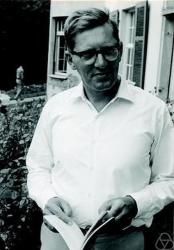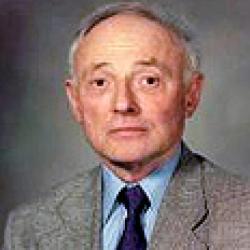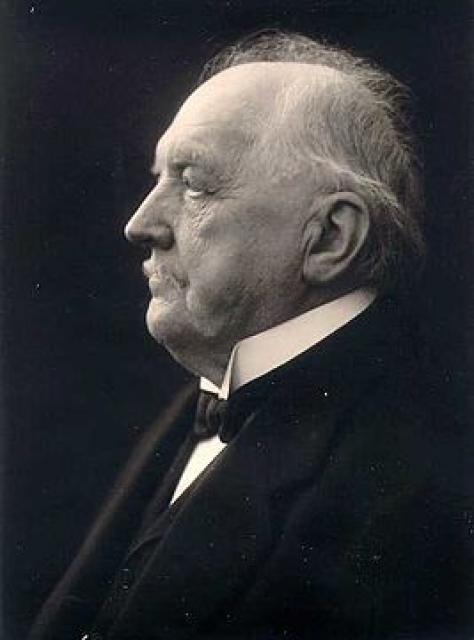
Martin Wilhelm Kutta
 Germany
Martin Wilhelm Kutta
Early Life and EducationMartin Wilhelm Kutta was born in Pitschen, Upper Silesia (now Byczyna, Poland). From 1885 to 1890, he studied at the University of Breslau (now Wrocław). He continued his studies in Munich, where he became an assistant to W. Dyck in 1894.
Academic Career and Research
In 1901, Kutta made a significant contribution to numerical analysis by developing the family of Runge-Kutta methods for approximating the solutions of ordinary differential equations. This family of methods remains widely used today.
In 1911, Kutta was appointed professor at the University of Stuttgart, where he remained until his retirement in 1935.
Aeronautical Contributions
Kutta also made important contributions to aeronautics. He is known for the Kutta-Zhukovsky airfoil and the Kutta condition, a boundary condition used in airfoil theory. The Zhukovsky theorem, named after the Russian mathematician Nikolai Zhukovsky, is often referred to as the Kutta-Zhukovsky theorem in international literature.
Legacy
Martin Wilhelm Kutta's work has had a lasting impact on mathematics and aeronautics. The Runge-Kutta methods are essential tools for solving differential equations, and the Kutta condition is a fundamental principle in airfoil design.
Personal Life
Kutta spent the later years of his life in Fürstenfeldbruck, Germany, where he passed away in 1944.