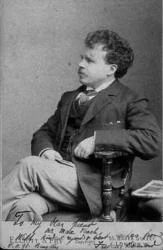
Maryvonne Le Dizes
 France
Maryvonne Le Dizès was a French violinist whose career joined a soloist’s ambition with a deep commitment to teaching and new music. She won first prize at the 1962 Paganini International Violin Competition, then spent more than two decades with the Ensemble intercontemporain, a Paris-based group devoted to contemporary classical music. Her performances and pedagogy brought modern repertoire into close contact with musicians and students.
Early life and musical education
Le Dizès was born in Quimper, Brittany, on June 25, 1940. She studied at the Paris Conservatoire, where she received top awards in violin and chamber music. Her success came early: she won the Paganini Competition in Genoa at age 22. The prize established her as a virtuoso soloist and was followed by other opportunities to perform internationally, including in the United States.
Teaching was part of her musical life from adolescence. At 14, she was already helping her teacher, Yvonne Blot, by accompanying students. She continued to teach throughout her career, later joining the regional conservatory in Boulogne-Billancourt in 1979. For Le Dizès, instruction and performance strengthened each other. She encouraged students to listen closely, work in ensembles, and explore contemporary music alongside the traditional violin repertoire.
A life in contemporary music
In 1979, Le Dizès joined the Ensemble intercontemporain, founded by Pierre Boulez to perform and develop the music of the present. She remained with the ensemble for more than twenty years. Its musicians worked directly with composers, giving performers a role in shaping how new scores could be brought to life. Le Dizès valued this exchange: she described discussing a score with its author, testing what was possible on the violin, and finding ways to realize the composer’s intentions.
Her repertoire brought her into close collaboration with leading composers, including Boulez and György Ligeti. She performed Ligeti’s demanding Violin Concerto with the ensemble in 1999. The work pushes the violin into extreme registers and unusual techniques; Le Dizès prepared it over many months and discussed details with the composer. In 1990, Philippe Fénelon dedicated Omaggio (a Tiepolo) to her, a recognition of her artistry and particular engagement with contemporary music.
She also performed chamber music in varied ensemble combinations. The ensemble’s recordings preserve her interpretations of works by Ligeti, Luciano Berio, Béla Bartók, Olivier Messiaen, Arnold Schoenberg, and others. Her work helped make complex new music more familiar to audiences by placing it alongside the chamber and solo repertoire already central to the concert hall.
Soloist and teacher
Although much of her later career centered on ensemble playing, Le Dizès developed as a soloist from the beginning. She returned to major works by Bach, Beethoven, Brahms, Schumann, and Prokofiev, and performed concertos as well as chamber music. Her early distinction at the Paganini Competition marked her among the leading violinists of her generation. She also competed at Carnegie Hall, describing herself as the first foreign woman to take part in that competition.
In the classroom, she sought to give students access to the musical ideas she encountered on stage. She introduced contemporary works at conservatories and in summer courses, explaining how unfamiliar sounds could expand a violinist’s technique and imagination. She believed young musicians could approach modern music when it was presented thoughtfully and in balance with technical studies and composers such as Vivaldi and Corelli.
Le Dizès’s career also reflected the challenges faced by women instrumentalists in a field where they were still unusual in prominent roles. In a 1998 interview, she recalled occasional dismissive comments, but also the significance of winning the Paganini Competition and building a long professional life as a soloist, teacher, and orchestra musician.
Legacy
Maryvonne Le Dizès died in Paris on August 9, 2024, aged 84. Her legacy is preserved in recordings, concert archives, and the students she taught. She brought precision and curiosity to the demanding music of her time, while treating teaching as an essential part of musicianship. Through her long association with the Ensemble intercontemporain, she helped give contemporary violin music a vivid and committed voice.