Masha & Dasha Krivoshlyapovy
 Russia
- The Tragic Story of Masha and Dasha Krivoshlyapova
- The Cruel Medical Experiments
- The Dichotomy of Personalities
- A Glimpse of Freedom
- Reconnecting with Family and the Outside World
- Finding Peace in the End
The Tragic Story of Masha and Dasha Krivoshlyapova
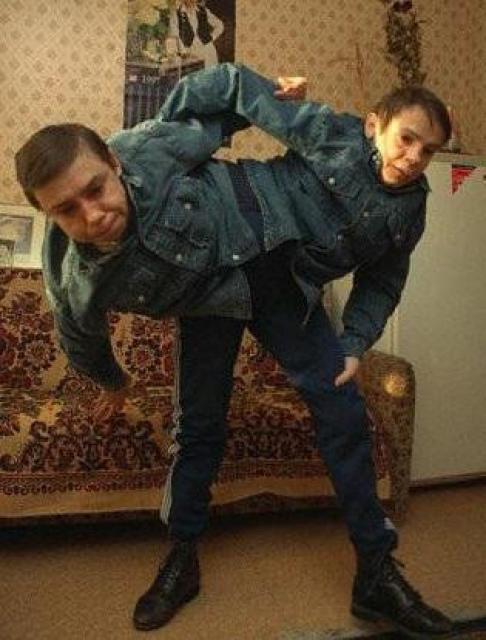
Masha and Dasha Krivoshlyapova were the oldest surviving conjoined twins in the world until their deaths in 2003. Their lives were marked by cruel medical experiments and a constant struggle for a normal existence. Born in January 1950 through a cesarean section, the twins were forcefully taken away from their mother, Ekaterina, who was later falsely informed that her babies had died from pneumonia shortly after birth.
The Cruel Medical Experiments
Under the Stalinist Soviet regime, the Krivoshlyapova twins were subjected to horrific medical experiments. Despite having a shared circulatory system, they had separate nervous systems, making them ideal subjects for scientific research. The twins were treated as guinea pigs, enduring pain, extreme temperatures, hunger, electric shocks, sleep deprivation, and the administration of radioactive and toxic substances – all in the name of "science." Much of their lives were spent within hospital walls, and their shocking story was brought to light by journalist Juliet Butler.
The Dichotomy of Personalities
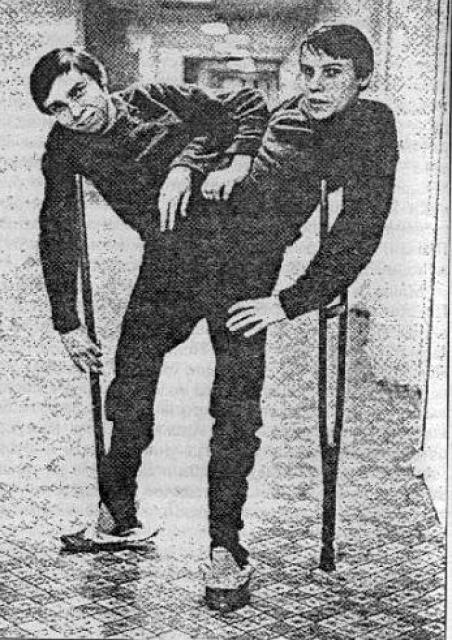
According to Butler, despite sharing genetics and a fused body, Masha and Dasha were vastly different individuals. One sister became a cruel, power-hungry psychopath, inflicting emotional abuse on her caring sister who yearned for a normal life. Having befriended the twins in 1988, Butler claimed, "I have no doubt that Masha was a psychopath. She fit all the criteria." "Dasha suffered from emotionally abusive relationships, much like some people endure from their partners." "But unlike others, Dasha couldn't physically leave."

A Glimpse of Freedom
As adults, many doctors offered the Krivoshlyapova twins the chance to undergo separation surgery. Each time, Masha refused, despite the advancements in medical science. In the late 1990s, the sisters received a letter from a British surgeon who specialized in separating conjoined twins, offering his assistance. With hope in her eyes, Dasha looked at Masha, but her sister immediately rejected the idea. They both believed that nothing could be done.

Reconnecting with Family and the Outside World
In 1985, the twins located their mother, Ekaterina Krivoshlyapova. They maintained contact with her for four years until Masha decided to sever all ties against Dasha's wishes. When they met their two biological brothers, they were rejected due to their physical appearance. While Dasha longed for work and attempted to secure a job supplying rubber bulbs for pipettes, Masha preferred to hold onto her familiar life of smoking and reading magazines.
Finding Peace in the End
After appearing on television, the conjoined twins were given the opportunity to move to a home for labor veterans, offering them improved living conditions. Butler states that despite the sadness that permeated their lives, the sisters were a source of inspiration. "I wanted to write a book to show people how kind Dasha was. It's a story of triumph over tragedy," the journalist shared. "Towards the end, I noticed how Dasha started standing up to Masha and putting her in her place." "Despite all the toxicity unfolding, in the end, the sisters had each other. They deeply loved one another."
On April 17, 2003, Masha passed away from a heart attack. According to one version, Dasha refused the offered separation surgery. On the other hand, such an operation would have required a whole team of specialists and extensive preparation time. Weakened, Dasha was admitted to the hospital and died 17 hours later due to blood poisoning from toxic substances entering her bloodstream from Masha's decomposing body.