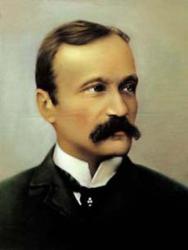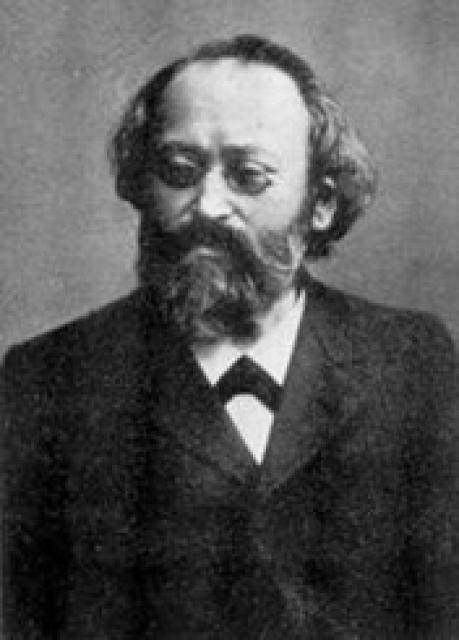
Max Bruch
 Germany
Early Life and Education
Max Bruch was a German composer and conductor born to a Catholic family in Cologne. His mother, Wilhelmine Bruch, was a singer who provided his initial music lessons. He later studied under Ferdinand Hiller (1853-1857) and then Karl Reinecke in Leipzig.
Early Career
In 1862-1864, Bruch worked in Mannheim, where he composed his opera "Loreley" (1863). The second edition of his cantata "Frithjof" (1864) brought him his first acclaim. He served as music director in Koblenz (1865-1867) and led the court orchestra in Sondershausen (1867-1870).
International Recognition
From 1880-1883, Bruch led the Liverpool Philharmonic Society, one of the UK's leading musical organizations. In Liverpool, he met his future wife, Clara Tuczek, who was of partly Jewish descent. They had four children, including the writer Margarethe Bruch.
Professorship and Late Years
Bruch taught at the Berlin Hochschule fur Musik from 1890-1910, where his students included Ottorino Respighi, Oscar Straus, and Ralph Vaughan-Williams. After World War II, his works were almost forgotten in Germany due to their association with Nazism.
Legacy
Bruch's large-scale choral works, such as "Odysseus" (1872) and "Das Feuerkreuz" (1899), were once popular. However, it is his symphonic works that have remained in the repertoire: his violin concertos (especially the first, Op. 26, 1868), "Scottish Fantasy" for violin and orchestra (Op. 46, 1880), and "Kol Nidrei" for cello and orchestra (Op. 47, 1881). In recent years, there has been renewed interest in his music.