Judith Weir
 Great Britain
- Early Life and Musical Education
- Influences and Compositional Style
- Operatic and Theatrical Works
- Orchestral and Chamber Music
- Awards and Recognition
- Leadership and Mentorship
Early Life and Musical Education
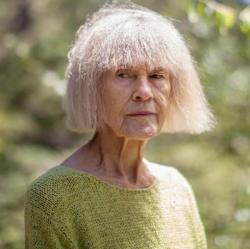
Judith Weir was born in 1954 in Cambridge, England. She began composing at an early age and studied under renowned composers John Tavener and Robin Holloway. She graduated from King's College, Cambridge, in 1976.
Influences and Compositional Style
Weir's music is characterized by its strong textural clarity and frequent inspiration from medieval history and Scottish culture. Her compositions are known for their evocative use of sound and special effects, even within traditional forms. She deftly avoids clichés while creating accessible pathways for listeners.
Operatic and Theatrical Works
Weir's operatic career began in 1985 with the one-act opera "The Black Spider." She has since composed several micro-operas, full-length operas, and a television opera. Notable works include "A Night at the Chinese Opera" (1987), "The Vanishing Bridegroom" (1990), "Blond Eckbert" (1994), and "Armida" (2005).
Orchestral and Chamber Music
Weir has gained international recognition for her orchestral and chamber pieces. Her works in these genres showcase her mastery of orchestration and her ability to evoke vivid soundscapes from simple musical ideas.
Awards and Recognition
Weir has received numerous awards for her contributions to music. In 1997, she was honored with the Stoeger Prize from the Lincoln Center. She also received the South Bank Show Music Award in 2001.
Leadership and Mentorship
From 1995 to 2000, Weir served as artistic director of the Spitalfields Festival in London. She was also an associate composer of the Birmingham Symphony Orchestra from 1995 to 1998. She continues to inspire young musicians through mentoring and teaching.