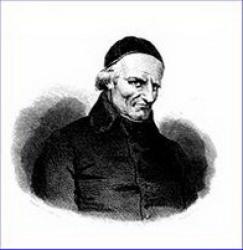
Max Dvorak
 Austria
- Max Dvorak: Pioneer of Art History as the History of Ideas
- Member of the Vienna School of Art History
- Theory of Idealism and Naturalism
- "Kunstgeschichte als Geistesgeschichte"
- Lectures on Medieval and Renaissance Art
- Discovery of Mannerism
- Influence on Art History
Max Dvorak: Pioneer of Art History as the History of Ideas
Early Life and EducationMax Dvorak, a Czech-born Austrian art historian, was born in the 19th century. He received his education in Prague and Vienna, where he began teaching in 1902. By 1909, he had become a professor at the University of Vienna.
Member of the Vienna School of Art History
Dvorak was a prominent member of the Vienna School of Art History. His research focused primarily on medieval, Renaissance, and Baroque art. After the death of Alois Riegl in 1905, Dvorak succeeded him in the Chair of Art History at the University of Vienna.
Theory of Idealism and Naturalism
Dvorak believed that the history of art was a history of ideas, influenced by the "spirit of the age" (Zeitgeist). In 1918, he published his seminal work, "Idealism and Naturalism in Gothic Sculpture and Painting." In this book, he argued that the evolution of artistic forms reflected the spiritual development of society.
"Kunstgeschichte als Geistesgeschichte"
Dvorak's theory rejected Riegl's emphasis on formal evolution. Instead, he proposed that the "history of the spirit" was the driving force behind artistic change. This concept formed the basis of the new direction in art history known as "Kunstgeschichte als Geistesgeschichte" (Art History as the History of Ideas).
Lectures on Medieval and Renaissance Art
Dvorak's most influential lectures covered the period from Giotto to Michelangelo. In these lectures, he analyzed the struggle between idealism and naturalism in art. He saw Michelangelo as the culmination of the Renaissance, whose art marked both its zenith and its decline.
Discovery of Mannerism
Dvorak was the first art historian to recognize the importance of Mannerism. He dedicated his life to studying this movement, which he believed was a significant transition between Renaissance and Baroque art.
Influence on Art History
Dvorak's theories have had a profound impact on art history. His emphasis on the relationship between art and the spiritual life of society continues to inform contemporary art historical research. His most famous student, Otto Benesch, became a leading authority on the Northern Renaissance.