Max Ophuls
 Germany
- Maximilian "Max" Ophüls: A Cinematic Visionary
- Theater and Early Film Success
- Exile and Emigration
- Hollywood Years
- Return to Europe and Cinematic Masterpieces
- "Lola Montès" and Its Legacy
- Later Years and Legacy
Maximilian "Max" Ophüls: A Cinematic Visionary
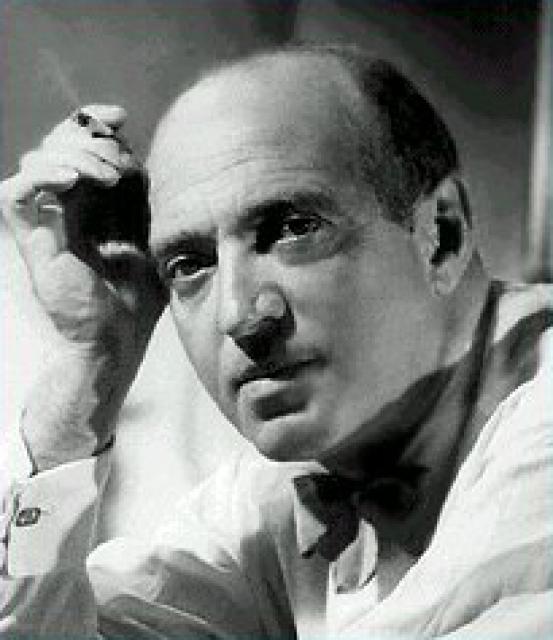
Early Life and CareerMaximilian "Max" Ophüls was born in Saarbrücken, Germany, on May 6, 1902. As the son of a merchant, he pursued an education in the arts, showcasing his musical abilities and passion for theater.
In 1920, Ophüls embarked on his acting career, first as a volunteer at the Württembergisches Landestheater in Stuttgart. His debut as an "actor on trial" occurred the same year, where he adopted the stage name Ophüls.
Theater and Early Film Success
Throughout the 1920s, Ophüls honed his skills as a theater director. He worked at various theaters in Germany, including the Vienna Burgtheater and the Schauspielhaus in Frankfurt am Main.
In 1931, Ophüls began collaborating with film studios. He wrote dialogue for Anatole Litvak's film "No More Love" and directed his first short film, "Ryba, Ryba," based on a story by Erich Kästner. His breakthrough came in 1933 with the release of "Flirt," an adaptation of Arthur Schnitzler's play, which became a critical and commercial success.
Exile and Emigration
After the rise of the Nazi Party in Germany, Ophüls fled to France in 1933. He worked on several films in Europe, including "La Comédie de l'Argent" in the Netherlands. In 1936, he accepted an invitation to work in Moscow but returned to Paris two months later.
Hollywood Years
In 1941, Ophüls and his family sought refuge in the United States, where he worked for a brief time at the "Voice of America" radio station. Despite writing screenplays for unrealized anti-Nazi films, Ophüls struggled to establish himself in Hollywood.
In 1944, he directed "Vendetta" for Preston Sturges, but was dismissed during production. He then worked on "The Exile" in 1946, but his years in Hollywood proved to be underwhelming in terms of productivity.
Return to Europe and Cinematic Masterpieces
In 1949, Ophüls returned to France, where he directed some of his most celebrated films. "La Ronde" (1950), based on Schnitzler's play, won the BAFTA Award for Best Film. "Le Plaisir" (1953) was praised for its adaptation of Guy de Maupassant's stories.
"Lola Montès" and Its Legacy
Ophüls's magnum opus, "Lola Montès," was released in 1955. A lavish biopic on the infamous courtesan, the film was a critical and commercial failure. However, François Truffaut and other members of the "Cahiers du Cinéma" hailed it as a masterpiece of avant-garde and auteur cinema.
Later Years and Legacy
In his later years, Ophüls worked on radio and stage productions in Germany. He died in Hamburg on March 25, 1957, from rheumatic heart disease. He is buried in the Père Lachaise Cemetery in Paris.
Today, Ophüls is remembered as one of the most influential directors of his time. His graceful camera movements, use of deep focus, and exploration of romantic themes continue to inspire filmmakers worldwide. The annual Max Ophüls Film Festival in Saarbrücken celebrates his legacy and showcases contemporary German-language cinema.