Max Stayner
 USA
USABiography of Max Steiner
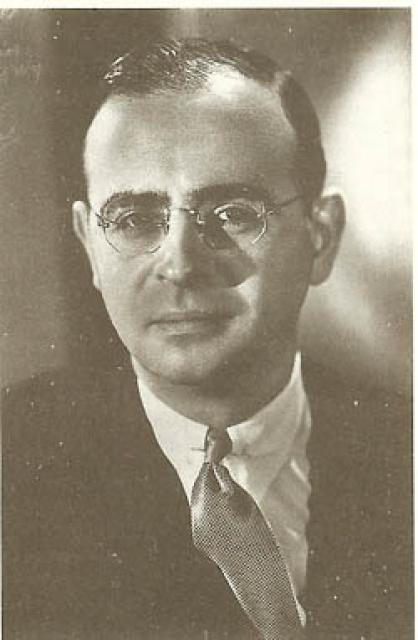
Max Steiner was an outstanding American film composer and a three-time winner of the Academy Award for Best Original Score. He was born into a theatrical family, with his grandfather, Maximilian Steiner, being the director of the Viennese theater "Theater an der Wien" and his father, Gabor Steiner, being the impresario of the Vienna Ferris wheel on Prater. His godfather was the renowned composer Richard Strauss.
Early Life and Education
Steiner displayed exceptional musical abilities from a young age. At the age of 16, he graduated from the Vienna Conservatory of Music and Performing Arts, completing a four-year course in just two years. His teachers included Johannes Brahms and Gustav Mahler, among others. He made his debut as a composer and conductor at the age of 15 with the operetta "The Beautiful Greek Girl".
Career in London and New York
From 1904 to 1914, Steiner worked as a conductor and arranger in the United Kingdom, primarily in London. However, with the outbreak of World War I, he became an enemy of England. It was only through his friendship with the Duke of Westminster that he was able to leave for New York with only $32 in his pocket. In New York, he initially worked as a conductor, artistic director, and arranger for Broadway operettas and musicals written by Victor Herbert, Jerome Kern, Vincent Youmans, and George Gershwin, among others.
Film Composition Career
In 1916, Steiner began composing for the cinema. It is presumed that during this time he Americanized his name, changing it to Max Steiner from Max Steiner. In 1929, Hollywood took notice of Steiner, and he was invited to orchestrate the film adaptation of Florenz Ziegfeld's show "Rio Rita" for RKO Pictures. This was followed by several more films. Steiner's breakthrough as a film composer came in 1933 with the release of the film "King Kong". He co-wrote the score for this film with the up-and-coming composer Bernhard Kaun. They were the first in the history of cinema to overlay dialogue with music, significantly enhancing the film's dramatic effect and creating one of the first film musical scores.
Academy Award Success and Later Career
In 1935, Steiner was twice nominated for an Academy Award for the films "The Informer" directed by John Ford and "The Gay Divorcee" directed by Mark Sandrich. The following year, he won his first Academy Award for the music in Ford's film "The Informer" (1935), although he received it as the head of the music department at RKO Pictures (composers were not nominated for Academy Awards until 1939).
Steiner continued to compose music for a series of musical films featuring the popular duo Fred Astaire and Ginger Rogers, such as "Top Hat" (1935) and "Roberta" (1935). In 1936, he left RKO Pictures and became the head of the music department at David O. Selznick's company, Selznick International Pictures. Over the years, he received numerous nominations and won three more Academy Awards for films such as "Now, Voyager" (1942), "Since You Went Away" (1944), and "The Adventures of Mark Twain" (1944).
Steiner's career continued to flourish, and he composed music for a wide range of genres, including westerns, dramas, comedies, musicals, and crime films. He also worked on television series, such as "Maverick" (1957) and others. He is often referred to as the "father of film music" due to his pioneering work in the field. Steiner wrote music for over 300 films, many of which are considered classics, as well as over 1200 compositions in total.
Max Steiner passed away on December 28, 1971, at the age of 83 in Beverly Hills. He is rightfully regarded as one of the most prolific and successful composers in Hollywood. He was nominated for the Academy Award 18 times, a record that has only been surpassed by composers Alfred Newman and John Williams. Additionally, Steiner was a favorite composer of actress Bette Davis, and his Max Steiner Society honors musicians who excel in interpreting his works. In 2003, a postage stamp featuring Max Steiner's photograph was issued in the United States.