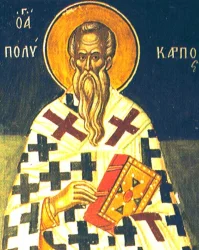
Maximus the Confessor
Maximus the Confessor was a seventh-century monk and theologian whose arguments helped shape Christian teaching about the nature of Jesus Christ. Born around 580, he lived through a period when the Byzantine Empire faced both military upheaval and fierce disputes over doctrine. He became a leading opponent of the imperial compromise known as Monothelitism, and his refusal to abandon his beliefs brought imprisonment, exile, and lasting recognition as a saint.
A Monk in a Divided Church
Details of Maximus’s early life are uncertain. He entered monastic life and became known for his learning in Scripture, philosophy, and theology. His surviving works range from letters and biblical commentaries to treatises on prayer, ethics, and the spiritual life. “Four Hundred Chapters on Love” explores the virtues and inner discipline, while “Ambigua” engages difficult passages in earlier Christian writers.
The controversy that made his name concerned how Christ’s divinity and humanity were united. Monothelitism held that Christ had two natures but one will, a formula promoted by some imperial and church leaders as a way to heal divisions among Christians. Maximus argued that a fully human Christ must possess a human will as well as a divine will. In his view, this teaching did not divide Christ; it showed that human nature was genuinely assumed and healed.
A Stand Against Imperial Policy
Maximus’s position drew him into disputes across the eastern Mediterranean. In 649, Pope Martin I convened the Lateran Council in Rome, which condemned Monothelitism. Maximus was an important intellectual force behind the council’s stance, even though he was a monk rather than a bishop. Emperor Constans II opposed the council and sought to suppress the controversy, viewing religious unity as a matter of state stability.
Maximus was arrested and tried in Constantinople in 655, then sent into exile. In 662, he was brought before another imperial tribunal and again refused to accept the doctrine of one will in Christ. Accounts of his final punishment report that his tongue and right hand were cut off, intended to prevent him from preaching and writing. He was then exiled to Lazica, in the eastern Black Sea region, where he died on August 13, 662.
A Theology Vindicated
The title “Confessor” refers to someone who suffered for the Christian faith without being executed as a martyr. Maximus’s life became a model of principled resistance to state pressure, but his influence rests equally on the precision and breadth of his thought. He wrote about the human will, freedom, spiritual transformation, and the relationship between the material world and divine purpose.
The Third Council of Constantinople, held in 680–681, affirmed the teaching that Christ had both a divine and a human will. This vindicated the central position for which Maximus had been punished. Revered as a saint in Eastern Orthodox and Roman Catholic traditions, he remains one of the most influential theologians of the late ancient church. His story joins intellectual rigor with personal courage: he insisted that theological language had real consequences for how Christians understood the humanity of Christ and, through it, the possibility of human renewal.