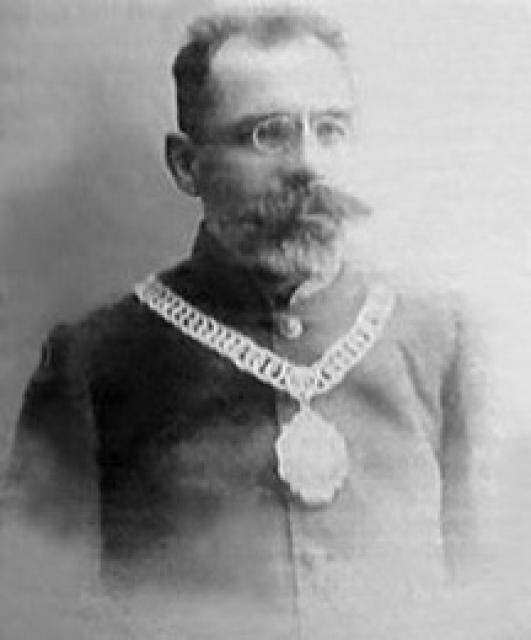
Metropolit Ilarion
- Early Life and Education
- Academic Career and Ukrainian Nationalism
- Ministerial Roles and Emigration
- Exile in Poland and Academic Pursuits
- Monasticism and Episcopate
- Legacy
Early Life and Education
Bishop Ilarion Ohienko was born on January 2, 1882, in Brusiliv, Kyiv Governorate, into a poor peasant family descended from an ancient Cossack lineage. Despite humble beginnings, he excelled academically, completing his education at the Kyiv Military Medical School and passing exams equivalent to a classical gymnasium education. In 1909, he graduated with honors from the Faculty of History and Philology of Kyiv's Saint Vladimir University, where he studied under renowned philologist Professor V. Peretz.
Academic Career and Ukrainian Nationalism
After graduating, Ohienko continued his studies at Higher Pedagogical Courses and obtained a Doctorate in Philosophy in 1931 from the University of Brno, Czechoslovakia, for his dissertation on the Ukrainian literary language in the 16th century. He taught at the Kyiv Commercial Institute and, from 1915 to 1918, served as a private lecturer at Kyiv University. During this period, he actively participated in the Ukrainization of educational institutions and played a significant role in the Ukrainian National movement. In 1917-1918, he delivered a speech at the All-Ukrainian Church Council advocating for Ukrainian ecclesiastical autonomy.
Ministerial Roles and Emigration
Ohienko was a member of the Ukrainian Socialist-Federalist Party. In 1918, he founded and became the first rector of the Kamianets-Podilskyi Ukrainian University. He supported Symon Petliura and held leadership positions in the Ukrainian People's Republic governments. From 1919 to 1920, he served as Minister of Education, Religion, and Foreign Affairs. As minister, he promoted the Ukrainization of education and advocated for Ukrainian ecclesiastical autocephaly. After the Ukrainian Directory left Kamianets-Podilskyi in 1920, Ohienko remained as head of government. Following the occupation of the city by Soviet forces, he emigrated to Poland.
Exile in Poland and Academic Pursuits
In Poland, Ohienko settled in Tarnów and founded the publishing house "Ukrainian Autocephalous Church," which published pamphlets and books authored by him. He actively collaborated with the Uniate Church and regularly printed his works in a Uniate printing house. From 1924 to 1932, he taught at the Orthodox Theological Faculty of Warsaw University. He was dismissed by Polish authorities for his advocacy of Ukrainizing the Orthodox Church. He continued to publish in Ukrainian journals and championed Ukrainian language and culture.
Monasticism and Episcopate
After the death of his wife in 1937, Ohienko entered monastic life and was ordained as a monk named Ilarion in 1940. Shortly after, he was consecrated as Bishop of Kholm and Lublin of the Polish Autocephalous Orthodox Church. As bishop, he vigorously promoted the Ukrainian language in liturgical services and founded an eparchial printing house, library, and publishing house. He authored numerous sermons, poems, and prose works with spiritual and educational content.
Legacy
Bishop Ilarion Ohienko died in Winnipeg, Canada, on March 29, 1972. He was a renowned scholar, educator, and spiritual leader who made significant contributions to Ukrainian culture, language, and religion. His legacy as a proponent of Ukrainian independence and ecclesiastical autocephaly continues to inspire and influence Ukrainian communities around the world.


