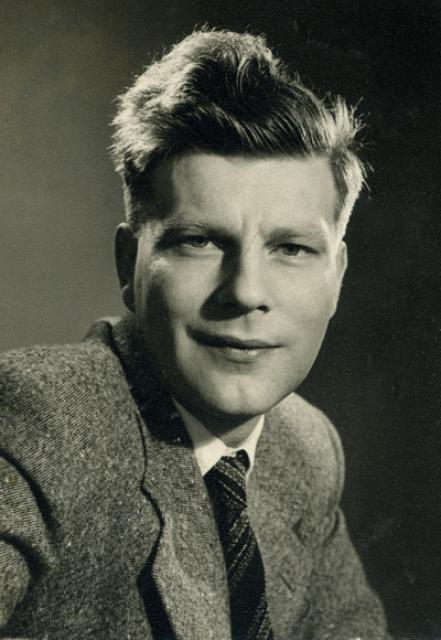
Michael Dummett
 Great Britain
- Early Life and Education
- Conversion to Catholicism and Early Career
- Logic and Philosophy of Language
- Theory of Meaning and Metaphysics
- Academic Appointments and Honors
- Influence and Legacy
Early Life and Education
Michael Dummett was born in London, England, on June 27, 1925. He attended Sandroyd School in Wiltshire and Winchester College in Hampshire. He then studied at Christ Church, Oxford University, where he earned a degree in philosophy.
Conversion to Catholicism and Early Career
In 1944, Dummett converted to Catholicism and has remained a practicing Catholic throughout his life. He began his teaching career at the University of Oxford, where he was a lecturer in philosophy from 1951 to 1964.
Logic and Philosophy of Language
Dummett's primary area of research was philosophy of language. He argued that Gottlob Frege was the first to recognize the central role of language in philosophy. Dummett developed Frege's theory of meaning, arguing that a systematic theory of meaning is the central task of philosophy of language. Such a theory would be a theory of what it means to understand a language.
Theory of Meaning and Metaphysics
Dummett claimed that different languages are essentially untranslatable and that a universal theory of metaphor is impossible. He argued that every interpretation is particular and contextual. His work on the philosophy of mathematics and metaphysics further explored the relationship between language, meaning, and reality.
Academic Appointments and Honors
Dummett held teaching positions at the University of California, Berkeley; the University of Birmingham; Princeton University; and Harvard University. He was Professor of Logic at Oxford from 1979 to 1992. In 1995, he was awarded the Rolf Schock Prize for his contributions to the study of Frege and his development of a theory of meaning.
Influence and Legacy
Michael Dummett was a major figure in the development of analytic philosophy in the 20th century. His work on philosophy of language, logic, and metaphysics has had a profound influence on contemporary thought. He passed away on December 27, 2011, leaving behind a legacy of critical thinking and innovative ideas.


