Emanuel Swedenborg
 Sweden
- Biography of Emanuel Swedenborg
- Scientific Activities and Literary Pursuits
- Contributions to Astronomy and Philosophy
- Legacy and Influence
Biography of Emanuel Swedenborg
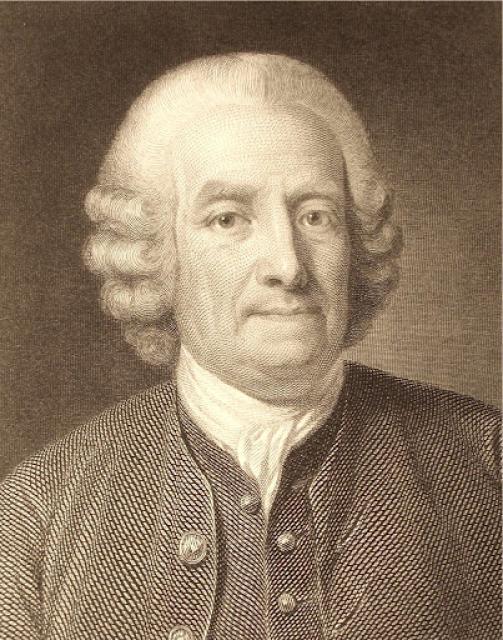
Emanuel Swedenborg was a Swedish scientist, theosophist, and mystic. He was born on January 29, 1688. In his childhood, Swedenborg did not receive a strong religious upbringing and had only a superficial understanding of religion in general and Christianity in particular. During his studies at Uppsala University, he became acquainted with the main principles of Protestantism, but they did not resonate with him. Instead, Swedenborg focused his attention on classical languages and literature, mathematics, and natural sciences. In 1709, he earned a doctorate in philosophy for his scholarly edition of the works of Seneca and Publius Syrus, with annotations by Erasmus and a Greek translation by Scaliger.
Scientific Activities and Literary Pursuits
In addition to his scientific endeavors, Swedenborg also found an outlet for his talents in Latin poetry, publishing two collections of his own poems. In 1716, he was appointed by King Charles XII as an assessor for the Board of Mines and was responsible for overseeing the construction of a canal and locks connecting Stockholm and Gothenburg. After the death of Charles XII, Queen Ulrika Eleonora elevated the Svedberg family to the nobility.
Apart from his studies in algebra, astronomy, and other sciences, Swedenborg dedicated time to developing his own moral and religious teachings. As a member of the Swedish parliament, he worked on challenging financial problems. From 1733 to 1736, he embarked on a journey through Bohemia and Germany, during which he published his work "Opera philosophica et mineralia," which encompassed both general philosophical principles and independent solutions to specific questions of scientific cosmogony.
Contributions to Astronomy and Philosophy
In the early 1740s, Swedenborg discovered the position of our solar system within the Milky Way and demonstrated that planetary orbits deviate from their normal state at regular intervals. In 1734, he published the treatise "Prodromus philosophiae rationalis" in Dresden, which critiqued certain aspects of Descartes, Bacon, and Leibniz's theories.
The intense pursuit of science, philosophy, and demanding governmental responsibilities took a toll on Swedenborg's already fragile health and disrupted the balance of his psyche. In 1745, during his stay in London, he experienced hallucinations and temporarily lost his vision. Although his vision quickly recovered, the hallucinations and visions became more frequent. Upon his return to Sweden, Swedenborg resigned from his duties and scientific pursuits to fully dedicate himself to his newfound calling. He wrote his main theosophical work, "Arcana Coelestia," which served as a detailed commentary on the first two books of the Pentateuch, based on his own Latin translation.
Following "Arcana Coelestia," Swedenborg published a series of works that consistently referenced the Bible and corresponding paragraphs from his main treatise.
Legacy and Influence
The communities of Swedenborgian followers spread to various countries, primarily the United States and the United Kingdom (with approximately 30,000 members in 1970). Since 1810, a society in London has been dedicated to the publication of his works.