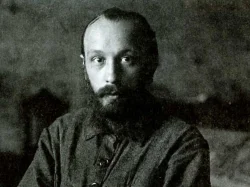
Michael Ende
- From the stage to storytelling
- The Jim Button books
- “Momo” and “The Neverending Story”
- Later years and legacy
Michael Ende was a German writer whose imaginative books invited children and adults alike into worlds where fantasy could illuminate ordinary life. Born in Bavaria to painter Edgar Ende and Luise Bartholomä, he grew up surrounded by his father’s visionary art. His stories would later become international favorites, translated into dozens of languages and read across generations.
From the stage to storytelling
Ende trained as an actor at Munich’s Otto-Falckenbergschule and performed with small theaters in northern Germany. He also worked as a film critic for Bavarian Radio and wrote sketches and songs for political cabaret. When his hopes for a lasting theater career faltered, he began writing a story that eventually became his first major success.
The Jim Button books
After more than a dozen publishers turned it down, “Jim Button and Luke the Engine Driver” appeared in 1960 and won the German Youth Literature Prize. Its sequel, “Jim Button and the Wild 13,” followed in 1962. The adventures established Ende as a distinctive storyteller, blending humor, vivid characters, and playful fantasy.
“Momo” and “The Neverending Story”
Ende moved to Italy with his first wife, actress Ingeborg Hoffmann, and spent years developing “Momo,” published in 1973. The novel follows a girl who confronts the Grey Gentlemen, figures who steal people’s time, and received both German and European children’s literature honors.
His best-known work, “The Neverending Story,” appeared in 1979. Its tale of Bastian and the endangered land of Fantastica became a landmark of modern fantasy. Ende was deeply unhappy with the 1984 film adaptation, believing it departed too far from his book, and had his name removed from the project.
Later years and legacy
Ende continued writing for theater and explored ideas about fantasy, culture, and politics. After Hoffmann’s death in 1985, he returned to Munich; in 1989 he married Mariko Sato, a Japanese translator of his work. He died near Stuttgart on 28 August 1995, after undergoing cancer treatment.
With books including “The Night of Wishes” and “The Mirror in the Mirror,” Ende built a body of work that crosses the boundary between children’s literature and adult fantasy. His stories remain beloved for their sense of wonder and their belief that imagination can help people see the world anew.