Michael Kemp Tippett
 Great Britain
Biography of Michael Tippett
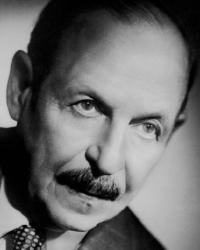
Michael Kemp Tippett was born in 1905 in London, Great Britain. He was the younger of two sons of a lawyer and entrepreneur, Henry William Tippett, who came from an ancient Cornish family. His mother, Isabel Clementina Binny Kemp, was a qualified nurse and also wrote stories and plays. She was a member of the Labour Party and a suffragette who suffered for her beliefs. In the year of Michael's birth, the family moved to the countryside of Suffolk, where he spent happy and active years enjoying nature and art. He engaged in home performances, sang in the church choir, and showed a talent for music from a young age. At the age of 10, Michael surprised his parents by declaring his determination to become a composer. He later shocked them again with his school essay refuting the existence of God. Michael attended Fettes College, which he despised, but found a better environment at Stamford Grammar School in Lincolnshire, where he played the piano. During the war, the Tippett family faced financial difficulties, but in 1923, Michael became a student at the Royal College of Music in London. This opened up a new world of musical and social opportunities for the young Tippett, and he eagerly absorbed everything, especially music. After completing his studies in 1928, Tippett began searching for his place in the British music scene. In 1929, he rented a small house in North Downs and taught at a local school while composing his own music. However, during this period, Tippett was more focused on social and political issues, as he became captivated by communist ideas. In 1930, he gave a local concert featuring only his own compositions.
Personal Life and Musical Achievements
Michael Tippett had an incredibly attractive personality that drew people, especially women, to him like a magnet. From a young age, he knew he was homosexual, which greatly concerned him, particularly due to his parents' lack of acceptance. Tippett became one of the first composers to openly declare his sexual orientation. By the mid-1930s, he had fully embraced pacifism. In fact, he spent several months in prison in 1943 due to his pacifist beliefs.

As a composer, Tippett's career took off late. His first major work, the opera "The Midsummer Marriage," was written in 1955. He went on to compose other notable operas such as "King Priam" (1961), "Knot Garden" (1970), "The Ice Break" (1973-1976), and "New Year" (1986-1988). Interestingly, Tippett wrote the librettos for his operas himself. One of his most famous compositions is the oratorio "A Child of Our Time." His orchestral and chamber works, including the "5 String Quartets," "4 Piano Sonatas," "Concerto for Double String Orchestra," "New Year Suite for Orchestra," "Fantasia Concertante on a Theme of Corelli," "Preludio al Vespro di Monteverdi," and "The Blue Guitar," also gained popularity.
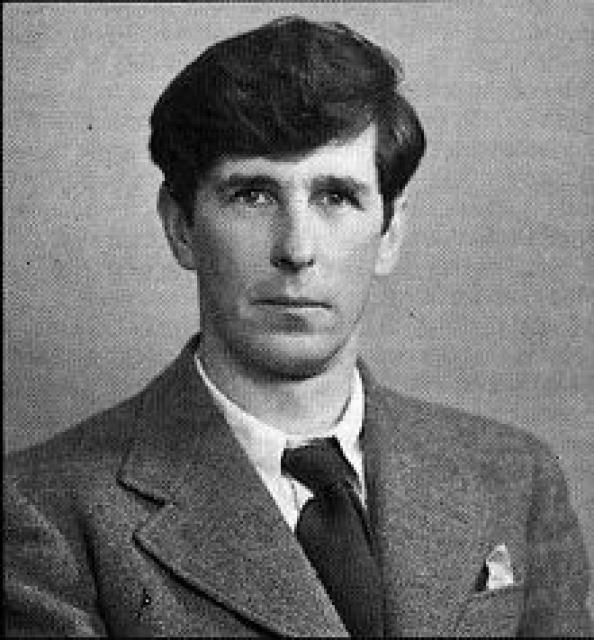
In the second half of his life, Tippett became a highly respected and sought-after composer. In 1960, he moved to a house in Corsham, Wiltshire, with his partner, the young artist Karl Hawker. Tippett worked as a music advisor at the Bath Academy of Art and turned his home into a salon where composers gathered. From the mid-1960s to the early 1970s, he collaborated extensively with the Leicestershire Schools Symphony Orchestra, composing several works for them. Tippett also served on the music committee of the British Council and worked for the BBC.
Tippett's contributions to music were recognized with the award of CBE in 1959 and a knighthood in 1966. He visited America for the first time in 1965 and was truly charmed by the country. From 1969 to 1974, Tippett served as the director of the Bath Festival. In the 1970s, his health began to deteriorate, particularly his eyesight. Nevertheless, his popularity as a composer remained strong, both in and outside of Britain. In 1979, he established The Michael Tippett Musical Foundation.
Tippett authored two books, "Music of the Angels: Essays and Sketchbooks of Michael Tippett" and the autobiography "Those Twentieth Century Blues." He passed away on January 8, 1998.
His musical legacy includes three large-scale choral works, four symphonies, five string quartets, four piano sonatas, and numerous chamber and instrumental compositions.