Imre Kalman
 Hungary
- Childhood and Adolescence
- Early Musical Aspirations
- Musical Pursuits and Obstacles
- Personal Life and Relationships
- Musical Career
- Legacy and Death
- Commemorations
Childhood and Adolescence
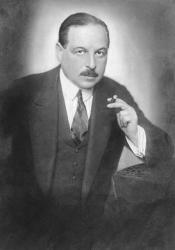
Imre Kálmán was born on October 24, 1882, in the picturesque town of Siófok, nestled amidst the shores of Lake Balaton, Central Europe's largest lake. The third child of six, Imre's parents, Karl Koppstein and Paula née Singer, initially named him Emmerich, a Hebrew name, which he later changed to Imre Kálmán in his youth. His early life was marked by financial stability, with his father holding considerable influence in the Siófok city council. The family home featured a piano, played by Emmerich's older sister, Vilma, and servants attended to household duties.
Early Musical Aspirations
As a child, Imre expressed a desire to become a tailor at age four and a lawyer at six. At nine, however, his father's bankruptcy forced the family to relocate to a modest apartment in Budapest, where the children were separated and sent to live with various aunts. Imre resided with his aunt Giza. While attending a Jewish elementary school and a Lutheran grammar school, he earned money through tutoring and clerical work. This period ignited his passion for becoming a professional musician.
Musical Pursuits and Obstacles
At age 15, Kálmán made his public piano debut, although his diminutive stature led the press to erroneously report his age as 12. By the end of 1898, his father's financial situation had improved, allowing their children to reunite with the family. Kálmán purchased a piano, but his dreams of a performing career were dashed when he developed arthritis. Undeterred, he shifted his focus towards composition.
Despite parental pressure to study law, Kálmán secretly enrolled in the music academy, where Béla Bartók became his classmate. Simultaneously, he worked as a music critic for the Budapest daily "Hari Hirlapja" (Pest Journal). Both his parents and the academy faculty expressed disapproval, leading Kálmán to resign from the paper and concentrate on writing a symphony.
Personal Life and Relationships
Despite his reputation as the composer of an anthem to free love in the song "Éjjel az omnibuszon" (By Night on the Bus) from his operetta "Czirkuszhercegnő" (Princess of the Circus), Kálmán was known for his modesty and reserve in matters of the heart. His first love, the Salzburg actress Paola Dvorzsák, remained his partner for 18 years. Despite her age being a decade older than Kálmán's, Dvorzsák became not only his lover but also his soulmate and guardian angel. She declined his marriage proposal due to her inability to bear children. Upon Dvorzsák's death in February 1928, Kálmán developed a habit of acquiring Dachshund dogs, the same breed owned by Dvorzsák, and naming them after the heroines of his operettas.
While still caring for his ailing partner, Kálmán embarked on a romance with silent film actress Agnes Esterházy. The heiress of an aristocratic family, Esterházy was content with being Kálmán's mistress; however, her flirtatious nature and unwillingness to abandon her career and other admirers ended their relationship.
Kálmán's children were born to Vera Makinskaya, whom he met in 1928 at the Viennese Café Sacher. The fair-haired Russian beauty, who dreamed of becoming an actress and lived with her mother in Austria, captivated Kálmán, despite the almost 30-year age difference between them. He dedicated his operetta "Das Veilchen vom Montmartre" (The Violet of Montmartre) to Makinskaya.
Their marriage produced three children: a son, Károly (Charlie), and two daughters, Lyyli and Yvonne. The elder siblings inherited Kálmán's musical talents. His marriage to Makinskaya was not without challenges, however. The age difference, along with their forced emigration following Kálmán's refusal of Hitler's offer, took its toll on their relationship. Additionally, Kálmán's superstitious nature, his fear of black cats and the number 13, and the loss of loved ones, including his brother Béla in his youth and two sisters in concentration camps during World War II, weighed heavily on his mind. Despite their divorce in 1942, Kálmán and Makinskaya reunited a year later and remained together until his passing.
Musical Career
As a student at the academy, Kálmán initially aspired to compose serious music, even creating the symphonic poem "Szaturnáliák" (Saturnalia), which was performed at the Hungarian State Opera House on February 29, 1904. However, music publishers rejected his symphonies in favor of the popular melodies he composed for cabaret performances.
Encouraged by friends to explore the genre of musical comedy, which flourished in Austria-Hungary under Emperor Franz Joseph I, Kálmán reluctantly penned his first operetta, "Őszi manőverek" (Autumn Maneuvers). Its premiere on February 22, 1908, was a resounding success, leading Kálmán to regard leap years as auspicious for him.
In total, Kálmán composed 17 operettas, with "Szilva" (The Queen of Csárdás) and "Czirkuszhercegnő" (The Princess of the Circus) among the most acclaimed. Each operetta showcased a blend of Viennese waltz and Hungarian csárdás melodies, sometimes infused with 20th-century rhythms such as the shimmy. Kálmán's polyphonic style drew inspiration from Giacomo Puccini, while his orchestration techniques echoed those of Pyotr Tchaikovsky. The most Hungarian of Kálmán's operettas is considered to be "Marica," while his last, "Az árizonai bányászlány" (The Arizona Lady), was completed by his son, Károly, after his father's death.
Legacy and Death
Kálmán suffered a heart attack in early 1949 and a stroke at the end of the same year, which paralyzed half of his face. A subsequent heart attack claimed his life on October 30, 1953. Despite his passing in Paris, Kálmán's body was interred in Vienna's Zentralfriedhof (Central Cemetery), near the graves of Ludwig van Beethoven, Wolfgang Amadeus Mozart, and Johannes Brahms according to his will. His life and work inspired Yuri Nagibin's novel, which in turn formed the basis of György Palásthy's 1985 Hungarian film "Kalman's Secret."
Commemorations
Films:- 1958: "Der Csardas-König" (The King of Csárdás)
- 1959: "Komponist Emmerich Kálmán" (Composer Imre Kálmán)
- 1985: "Kalman's Secret"
Songs:
- 1989: "Viva Kalman!" (Agatha Christie)
Monuments and Depictions:
- Statue outside the Hungarian State Opera House
- Monument in Siófok
- Sculpture in Siófok Park
- Memorial Room in the Austrian National Library
- Austrian postage stamp issued in 1982
Operettas:
- 1908: "Őszi manőverek" (Autumn Maneuvers)
- 1910: "Der Zigeunerprimas" (The Gypsy Premiere)
- 1912: "Der kleine König" (The Little King)
- 1912: "Der Zigeunerprimas" (The Gypsy Premiere)
- 1915: "Szilva" (The Queen of Csárdás)
- 1917: "Tavaszi szerelem" (Spring Love)
- 1920: "Die Zirkusprinzessin" (The Circus Princess)
- 1921: "Bajadere" (Bayadère)
- 1924: "Marica" (Marica)
- 1926: "Czirkuszhercegnő" (The Princess of the Circus)
- 1927: "Gold gab ich für Eisen" (I Gave Gold for Iron)
- 1928: "Herzogin von Chicago" (The Duchess of Chicago)
- 1930: "Das Veilchen vom Montmartre" (The Violet of Montmartre)
- 1932: "Der Teufelsreiter" (The Devil's Rider)
- 1936: "Kaiserin Joséphine" (Empress Josephine)
- 1945: "Marinka" (Marinka)
- 1953: "Az árizonai bányászlány" (The Arizona Lady)
Filmography:
- 1929: "Der Zigeunerprimas" (Germany)
- 1931: "Tavaszi szerelem" (Germany)
- 1932: "Gräfin Mariza" (Germany)
- 1934: "Die Csárdásfürstin" (Germany)
- 1934: "La princesse Czardas" (France)
- 1944: "Silʹva" (USSR)
- 1951: "Die Csárdásfürstin" (Germany)
- 1958: "Marica" (Germany)
- 19