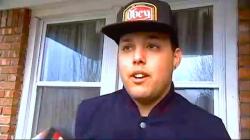
Michael Pell
 Great Britain
- The Spinal Stroke Survivor: Michael Pell's Journey
- Mistaking the Unexpected
- Struggling for Control
- A Hidden Fire
- Understanding Spinal Strokes
- The Impact of Location
- Risk Factors
- A Puzzling Diagnosis
- A Moment of Clarity
- The Path to Recovery
The Spinal Stroke Survivor: Michael Pell's Journey
A Life-Altering MorningOn a seemingly ordinary winter morning, 69-year-old Michael Pell embarked on his usual gardening routine. However, this day took an unexpected turn when he experienced an excruciating surge of pain in his back. His legs went numb, and his body was wracked with a series of spasms.

Mistaking the Unexpected
Initially, Pell dismissed the pain as an accidental kick from a trespasser. But upon realizing that no wild animals were involved, he contemplated if it was a bizarre form of cramp. He attributed the numbness in his legs to the four hours he had spent gardening, mostly on his knees.

Struggling for Control
Pell's journey to the back door of his cottage felt like the longest 100 yards of his life. His wife assisted him in sitting, but that provided little relief. While his ankles and feet moved, he had virtually no control over his legs.
A Hidden Fire
A new sensation emerged: an intense burning sensation in his lower back and upper legs. Little did Pell know, he had suffered a stroke, but not the typical kind that affects the brain. This time, the damage had occurred in his spine.
Understanding Spinal Strokes
Spinal strokes share a similar cause as brain strokes: disrupted blood flow or hemorrhage due to a damaged blood vessel. When the affected part is the spinal cord, it ceases to function properly, as Michael Pell experienced.
The Impact of Location
Strokes occurring in the lower part of the spine primarily affect the legs, often causing paralysis. The upper body typically remains unaffected. In contrast, spinal strokes in the neck can lead to complete body paralysis, posing a greater risk.
Risk Factors
Spinal strokes can arise from cholesterol-related issues that narrow the arteries, blocking blood flow to the brain or spine. Blood vessel damage can also occur due to congenital abnormalities or external factors. Certain surgical procedures, such as abdominal aortic aneurysm repair, can also increase the risk. Smoking and obesity are additional potential risk factors.
A Puzzling Diagnosis
Pell's initial assumption of an injury was incorrect. Despite the numbness and burning sensations, he persisted with his lunch. However, when he eventually sought medical assistance, initial tests failed to pinpoint the cause. Spinal strokes are notoriously difficult to identify, as doctors initially consider more common causes of numbness.
A Moment of Clarity
Ruling out probable causes, an MRI of Pell's spine finally provided a definitive diagnosis. While surprised, he was relieved that the stroke had not rendered him immobile.
The Path to Recovery
Pell's mobility remains somewhat impaired, particularly in his right leg, which is nearly paralyzed above the knee. He continues physical therapy, but acknowledges that the damage to his nerves may be irreversible. If improvements are not observed within 18 months, medical intervention will likely be exhausted. Despite the uncertainty, Pell remains optimistic and steadfast in his belief that the future holds hope.