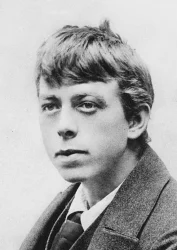
Michel Houellebecq
Michel Houellebecq became one of France’s most visible contemporary novelists by writing about subjects many readers found uncomfortable: loneliness, sex, consumerism, religion and the fear that public life is coming apart. His novels have drawn international audiences and major prizes, while his blunt interviews have repeatedly turned the author himself into a public controversy. The tension between literary observation and provocation has followed him throughout his career.
Early Life and Education
Houellebecq was born Michel Thomas on 26 February 1956 on the French island of Réunion. His parents separated when he was young, and he was raised largely by his paternal grandmother, whose maiden name he later adopted as his literary surname. His mother was a physician and his father a mountain guide. He has kept much of his private life away from public view, and accounts of his childhood have often come from his own recollections.
He studied agronomy at the Institut national agronomique Paris-Grignon and later worked in computer administration, including at France’s National Assembly. Poetry came before the novels. In the early 1990s he published verse and a critical study of horror writer H. P. Lovecraft, developing a cool, detached voice that would become a trademark of his fiction.
Novels and a Growing Reputation
His first novel, Whatever, appeared in 1994. Its narrator is an isolated computer worker whose professional life and romantic prospects seem equally bleak. The book established themes Houellebecq would return to: the pressures of economic competition, the commodification of intimacy and the search for connection in a society that treats people as consumers.
The Elementary Particles, published in 1998, brought him wider attention. The novel’s bleak account of sexuality, science and social change sparked intense debate in France and established him as both a major literary talent and a controversial public figure. Platform, published in 2001, extended his examination of desire and tourism, but its treatment of religion and terrorism drew criticism as well as legal action. In 2002, a Paris court acquitted him after he was accused of inciting hatred through remarks about Islam in an interview.
Houellebecq continued to publish novels that mixed social satire with speculative or political scenarios. The Possibility of an Island won the Interallié Prize in 2005. The Map and the Territory, a self-aware novel about art, work and celebrity, received the Prix Goncourt in 2010. Submission, published in 2015, imagined a near-future France in which an Islamic political party comes to power; the novel provoked fierce arguments about its portrayal of Islam and the country’s politics. Serotonin followed in 2019, and Annihilation appeared in 2022, turning toward political anxiety, family relationships, illness and mortality.
Public Controversies
Houellebecq’s interviews have at times generated reactions as strong as his fiction. In a 2022 interview with the magazine Front Populaire, he made remarks about Muslims and predicted violence against them in France. The comments drew condemnation and led to legal complaints. In a memoir published in 2023, he described the backlash and characterized his own statements as clumsy.
On 10 November 2026, an investigating judge in Nanterre formally placed Houellebecq under investigation for alleged complicity in incitement to discrimination, hatred or violence over those 2022 remarks. The proceeding is ongoing, and the allegation has not been adjudicated. The case revived a long-running debate around his work and public speech: where provocation ends and discriminatory rhetoric begins, and how an artist’s words should be judged outside the fiction they produce.
Legacy
Houellebecq’s spare, often deliberately flat prose has made him widely translated and frequently debated. Supporters see a sharp observer of consumer culture and modern loneliness; critics argue that his novels can reproduce the prejudices they claim to expose. Both responses reflect the way his work repeatedly unsettles readers and turns social anxieties into literary material.
His importance rests on more than controversy. From Whatever to Annihilation, he has built a body of fiction concerned with people trying to find attachment in a world organized around competition, appetite and fear. The work’s pessimism is unmistakable, but its recurring focus on vulnerability and the desire for love gives it an emotional current beneath the provocation.