Mihail Shatilov
- Mikhail Bonifatievich Shatilov: A Siberian Revolutionary and Scholar
- Political and Journalistic Career
- February Revolution and Bolshevik Uprising
- Siberian Oblast
- Autonomy and Soviet Regime
- Political Repression and Death
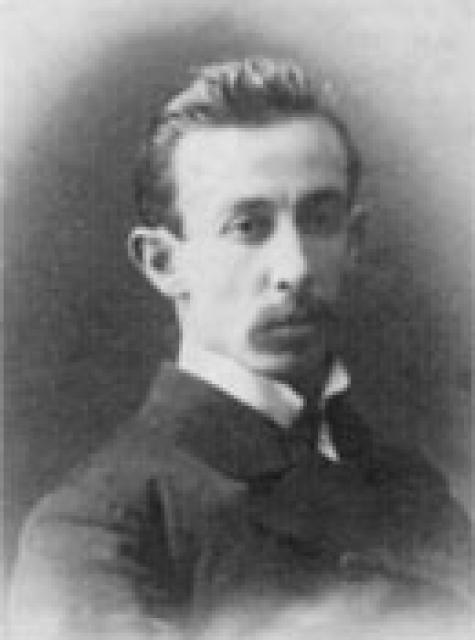
Mikhail Bonifatievich Shatilov: A Siberian Revolutionary and Scholar
Early Life and EducationMikhail Bonifatievich Shatilov was born into the family of a village teacher. He graduated from a theological school and seminary in Tomsk before pursuing a law degree at Tomsk University in 1909. According to some sources, he also completed two years of study at the university's history and philology department.
Political and Journalistic Career
As a student, Shatilov worked for the newspapers "Sibirskaya Zhizn" and V.S. Miroedov's "Ezhemesiachny Zhurnal." He edited and published "Sibirsky Student" (Siberian Student) from 1914 to 1917. From 1917 to 1918, he served as the editor of "Golos Svobody" (Voice of Freedom), a publication of the Tomsk Provincial Committee of Public Order and Security.
Shatilov was a disciple of Grigory Nikolaevich Potanin and an advocate of Siberian autonomy. During the Tsarist regime, he faced multiple arrests for his political activities.
February Revolution and Bolshevik Uprising
At the outbreak of the February Revolution, Shatilov joined the Socialist Revolutionary party (SRs). He held several positions in the Provisional Government, including Assistant Commissioner in Tomsk Province, and participated in the Moscow State Conference. He was elected to the All-Russian Constituent Assembly from the Altai Mining Duma, the Altai Provincial Council of Peasant Deputies, and the SRs.
As a member of the Executive Committee of the Tomsk Provincial Assembly, Shatilov played a key role in organizing a commission for regional self-government in Siberia. His report at the first session of the Provincial Assembly resulted in resolutions on the establishment of a regional Duma and self-governance.
Siberian Oblast
At the first Siberian Oblast Congress in Tomsk, Shatilov delivered a report on "Siberia as an Integral Part of the Russian Federative Republic." He was elected to the temporary executive committee of the Siberian Oblast Congress. At the Extraordinary All-Siberian Congress, he was chosen to represent the SR faction in the Provisional Siberian Oblast Council.
On the night of January 26, 1918, Shatilov and other members of the Oblast Duma were arrested by the Soviet authorities. He remained in prison until February 3, 1918. Despite his imprisonment, the Duma elected him Minister without Portfolio in the Provisional Government of Autonomous Siberia.
Autonomy and Soviet Regime
After the collapse of Soviet power in Siberia on June 30, 1918, Shatilov served as Minister of Native Affairs in the Provisional Government of Autonomous Siberia. However, his status as the only SR in the government made him a target of its right-wing members. He was arrested on September 21, 1918, and forced to resign.
Following the re-establishment of Soviet authority in Tomsk, Shatilov worked at the university's Department of Native Law and Customs from 1920 to 1922. He founded and directed the Tomsk Regional Museum (1922-1933) and conducted ethnographic research expeditions.
Political Repression and Death
In December 1923, Shatilov publicly renounced his membership in the Socialist Revolutionary party. Despite this, he faced continued harassment by the Bolshevik authorities. He was arrested several times, including in 1931 on charges of involvement in a "White Guard conspiracy."
On April 1933, Shatilov was again arrested and sentenced to 10 years in a labor camp. He was rehabilitated by a military tribunal in July 1959. However, the exact date, place, and circumstances of his death remain unknown.