
Miles Soloman
 Great Britain
- British Teen Discovers Error in NASA Data
- Identifying the Problem
- The Discovery
- Linking Up with NASA
- Collaboration with NASA
- The Importance of Citizen Science
- Impact on Friends and Peers
- The Value of Real-World Science
British Teen Discovers Error in NASA Data
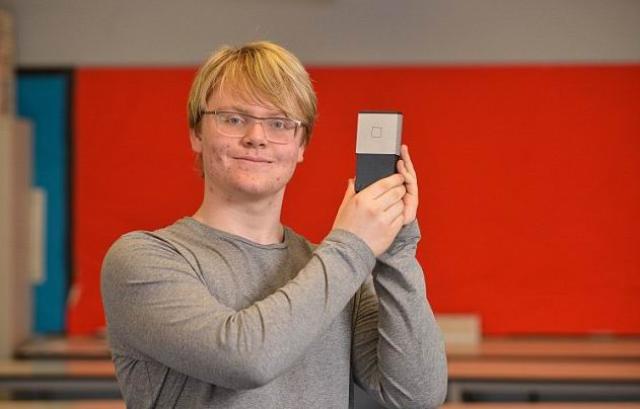
A British school student contacted NASA scientists to point out an error in their own data set. Now 17, Myles Solomon discovered that radiation sensors on the International Space Station (ISS) were improperly recording zero readings.
Identifying the Problem
Solomon, a high school overachiever, was participating in the "TimPix" educational project, which allows students across the U.K. to work with data from the space station and identify anomalies or patterns that could lead to further discoveries. During British astronaut Tim Peake's time on the ISS, detectors had started recording radiation levels.
The Discovery
"I went straight to the bottom of the list to the lowest energy readings there," said Solomon. His physics teacher, James O'Neill, described the moment Solomon pointed out a discrepancy: "'Why does it say energy minus one here?'"
Linking Up with NASA
The teenager spotted that when the sensors detected no radiation, a placeholder algorithm was recording a negative value. It became clear that NASA had made an oversight. Solomon and his teacher contacted the agency and shared their findings.
Collaboration with NASA
"That's what's quite cool," said Solomon, "I can say to my friends that I emailed NASA and they're actually checking their graphs to my work." NASA acknowledged the error but had estimated that it occurred only once or twice a year. Solomon, however, found that the spikes actually occurred several times a day.
The Importance of Citizen Science
Professor Larry Pinsky, who works on radiation monitors for NASA, said, "The folks at NASA thought they had it figured out." He emphasized the significance of educational programs in data-heavy fields: "I think it really underscores how important educational projects are in any field where there's big data. I'm convinced that students can find all kinds of interesting things that the professionals don't have time to look at."
Impact on Friends and Peers
When asked about his friends' reactions, Solomon admitted, "They definitely think I'm a nerd... It's a mixture of envy and boredom when I tell them the ins and outs of it." He added, "I'm not trying to prove NASA wrong; I just want to work with them and learn from them."
The Value of Real-World Science
Professor Becky Parker, who leads the IRIS education project for schools, said that "exposing real science in the classroom" helps cultivate interest in subjects like technology, engineering, and math. "Our project is helping to provide authentic scientific research to students, regardless of their background or school type. The experience is inspiring them to become the next generation of scientists."


