Milo Dukanovic
 Montenegro
Biography of Milo Djukanovic
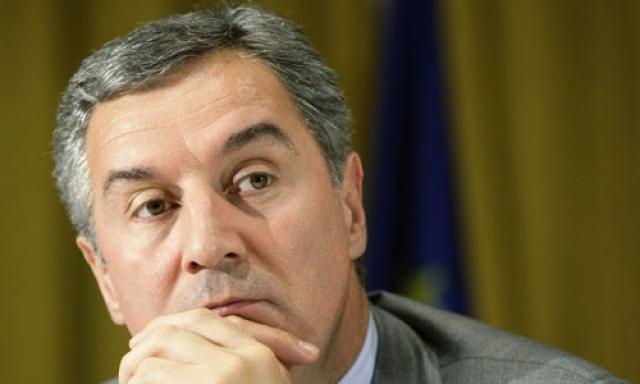
Milo Djukanovic, the current Prime Minister of Montenegro, has spent almost two decades of his active political career not only separating Montenegro from Yugoslavia, but also raising the country's economy to a new, European level.

Early Life and Education
Milo Djukanovic was born on February 15, 1962, in Niksic, Montenegro, to Judge Radovan Djukanovic and nurse Stana Djukanovic. The Djukanovic family is one of the oldest in Montenegro. He graduated from the local school and enrolled in the Faculty of Economics at Veljko Vlahovic University in Titograd. He completed his studies in 1986, obtaining a degree in tourism economics. His classmates remember him as a talented basketball player, standing at 190 centimeters tall. Many of his qualities, such as toughness, straightforwardness, and aggressiveness, have been preserved throughout his political career.
Political Career
In 1976, at the age of fourteen, Djukanovic joined the "Yugoslav Communist League," and his father was an influential member of the "League of Communists of Montenegro" party. His rapid career growth as a young politician is largely attributed to this. By 1986, he was already a member of the "Presidium of the Socialist Youth" and chairman of its Montenegrin branch. His party comrades nicknamed him "the razor" due to his character and straightforwardness. Alongside his allies Momir Bulatovic and Svetozar Marovic, Djukanovic pushed the so-called "old guard" out of power in Montenegro, launching a campaign known as the "anti-bureaucratic revolution" with the support of Slobodan Milosevic. Djukanovic quickly climbed the career ladder, and within a few years, he became the secretary of the "Presidium of the League of Communists of Montenegro." At the age of 26, Djukanovic became one of the leaders of Montenegro, although he did not hold any important positions formally.
In 1990, after the abolition of the one-party system in Montenegro, the "League of Communists of Montenegro" achieved a convincing victory in the parliamentary elections. In 1991, Djukanovic's appointment as Prime Minister came as a surprise to many since he had mostly been in the shadow. At 29, Djukanovic became the youngest Prime Minister in Europe. In 1992, the party was renamed the "Democratic Party of Socialists of Montenegro," and it achieved another convincing victory in subsequent elections. Due to his proximity to the then President of Yugoslavia, Milosevic, and the President of Montenegro, Bulatovic, Djukanovic held the position of Prime Minister until 1998. During his term, he actively opposed the dissolution of Yugoslavia and even sent troops to Croatia when it tried to secede from Yugoslavia.
Presidency and Independence
In 1997, Djukanovic decided to run for the presidency of Montenegro. In the first round of elections, he lost to Bulatovic by only about 2,000 votes, but in the second round, he managed to surpass his opponent. His victory was largely determined by the fact that Bulatovic remained a loyal ally of Milosevic, who had suddenly become a criminal in the eyes of the international community. Despite protests from Bulatovic's comrades and their staged scenes of violence, Milo Djukanovic was sworn in as the President of Montenegro in January 1998.
After the war in Yugoslavia, Djukanovic made every effort to keep Montenegro within the Federal Republic of Yugoslavia. In 1999, he stated, "Montenegro is not Slovenia; it is an integral part of Yugoslavia, and we want to remain so." After 2000, when Zoran Djindjic and Vojislav Kostunica came to power in Belgrade, Djukanovic's relationship with Yugoslavia was severely damaged. He actively began advocating for Montenegro's independence.
On November 25, 2002, Djukanovic resigned from the presidency to return as the Prime Minister of the country. Until 2006, he actively fought with Serbia for Montenegro's independence and achieved it in 2006 through a referendum organized by him.
In 2006, he offered his candidacy for the position of Minister of Defense, which sparked a wave of criticism from his detractors. Ultimately, the decision was deemed unconstitutional. In November of the same year, he resigned, even though his party won the parliamentary elections. He stated that he was tired of being in power and wanted to try his hand in business.
However, Djukanovic did not have a long rest. In 2008, he was reappointed as the Prime Minister of Montenegro, a position he still holds today.