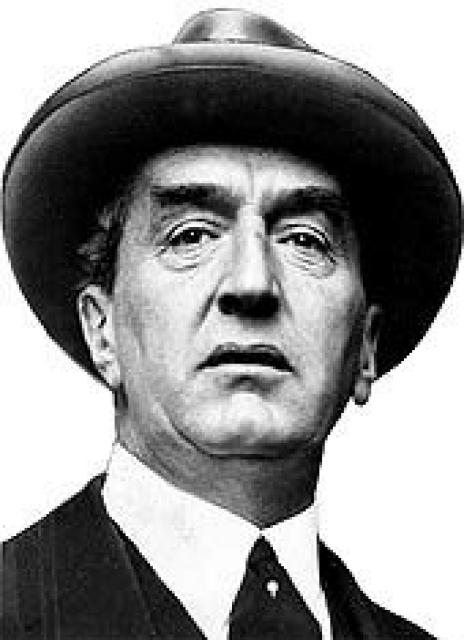
Stanley Melbourne Bruce
 Great Britain
- Early Life and Education
- Military Service
- Political Career
- Prime Ministership (1923-1929)
- - Establishing a coalition government with the Country Party
- - Strengthening Australia's role in British Imperial foreign policy
Early Life and Education
Stanley Melbourne Bruce was born on April 15, 1883, in Melbourne, Victoria, to Scottish businessman John Munro Bruce and Mary Ann Bruce. In 1891, he enrolled in a private boarding school in Toorak, and in 1896, he transferred to the prestigious Melbourne Church of England Grammar School.
Following a financial crisis in the 1890s, Bruce's family relocated to Britain. He briefly worked in his father's warehouse before matriculating at Trinity Hall, Cambridge, in 1902. After graduating from Cambridge, Bruce studied law in London and was called to the bar in 1907.
Military Service
With the outbreak of World War I, Bruce joined the British Army's Worcestershire Regiment. He served in the Dardanelles campaign, where he was wounded and awarded the Military Cross. After recovering, he was deployed to France only to be wounded again. He was discharged from active service and returned to Britain.
Political Career
In 1918, Bruce returned to Australia and became involved in politics. He joined the Nationalist Party and was elected to the House of Representatives as the member for Flinders. In 1921, he was appointed Treasurer (Finance Minister).
When the Nationalist Party lost its majority in the 1922 election, Prime Minister William Hughes was forced to resign. Hughes recommended Bruce as his successor, and on January 9, 1923, Bruce became Australia's youngest Prime Minister at the age of 39.
Prime Ministership (1923-1929)
Bruce's premiership was marked by a number of significant achievements, including:
- Establishing a coalition government with the Country Party
- Leading Australia to economic development through the "people, markets, and money" strategy
- Strengthening Australia's role in British Imperial foreign policy
- Establishing a national capital in Canberra- Increasing federal powers in industrial relations
Later Career
After losing the 1929 election, Bruce returned to Britain and pursued business interests. However, he returned to Australian politics in 1931, re-entering the Parliament as a member of the United Australia Party. He served as a Minister without Portfolio in the government of Joseph Lyons before resigning in 1933 to become Australia's High Commissioner to the United Kingdom, a post he held for 12 years.
In 1947, Bruce became the only former Australian Prime Minister to be granted a hereditary peerage. He was the first Australian to sit in the British House of Lords. Stanley Melbourne Bruce died childless in London on August 25, 1967.