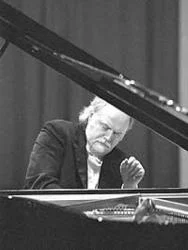
Milton Blackstone
Milton Blackstone built his musical life around an instrument that often stands just behind the violin in the public eye: the viola. As a founding member of Toronto’s Hart House String Quartet, he helped establish professional chamber music in Canada during a period when concert life was shifting from largely amateur activity toward a permanent professional scene. He was also a teacher and an outspoken advocate for Canadian musicians’ place on Canadian stages.
Early Work in Toronto and Ottawa
Blackstone was born in Canada in 1899 and died in 1972. Biographical details about his early life are scarce, but his working career is visible in the city’s concert and theatre records. By the late 1910s, he was active as a violist and had served as music director at Ottawa’s Centre Theatre. In 1924, the Toronto Conservatory of Music placed him in charge of a junior orchestra class, preparing younger players for more advanced ensemble work.
The Hart House String Quartet
Blackstone’s most lasting role began in 1924, when he became the violist in the Hart House String Quartet at the University of Toronto. The original ensemble also included violinists Géza de Kresz and Harry Adaskin and cellist Boris Hambourg. The university-based quartet was Canada’s first fully professional string quartet, with Vincent Massey providing financial support after its first Toronto concert in April 1924.
The quartet gave chamber music a regular, professional platform and carried Canadian musicians to audiences well beyond Toronto. It toured across Canada, the United States, and Europe, broadcast on CBC and BBC, and recorded for RCA Victor. The ensemble also helped introduce Béla Bartók’s String Quartet No. 1 to audiences in Toronto, Montreal, Boston, and San Francisco, and supported Canadian compositions. Blackstone remained with the quartet through its early decades, until 1941, as its membership and roles shifted; the ensemble gave its final concerts in 1946.
A Voice for Canadian Musicians
Blackstone’s work extended beyond performance. In 1939, he urged Canadian concert organizations to include Canadian artists in their programs, arguing that even one engagement in each concert series would help build a national musical culture. He was not calling for Canadian performers to receive a monopoly; his appeal was for a fairer place in the concert calendar, at a time when foreign performers often benefited from more powerful publicity networks. His letter reflected both a musician’s practical concern for work and a broader commitment to developing Canadian musical life.
Legacy
Blackstone belonged to a generation that helped turn chamber music into a sustained professional practice in Canada. Through the Hart House Quartet, teaching, and public advocacy, he contributed to an infrastructure for musicians and audiences alike. His work is remembered less through a soloist’s celebrity than through the ensemble he helped build: a touring, broadcasting, recording quartet that set an early standard for professional chamber music in the country.