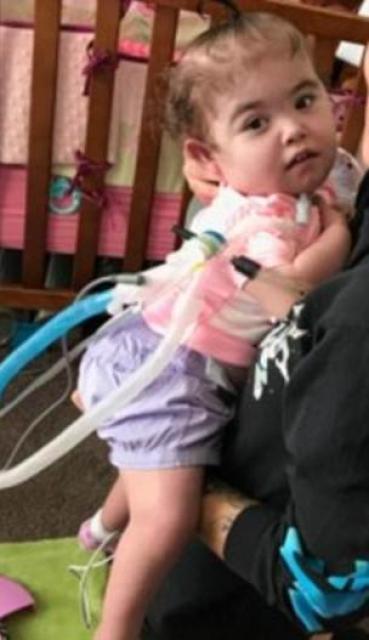
Miracle and Journee Brooks
- Miracle and Journey: The Extraordinary Story of Conjoined Twins
- Surgery and Survival
- Jasmine's Struggles
- Separation Surgery: A Complex Procedure
- Post-Separation Challenges
Miracle and Journey: The Extraordinary Story of Conjoined Twins
Birth and SeparationIn September 2015, Jasmine Brooks gave birth to conjoined twins, Miracle and Journey, in Shelbyville, Kentucky. Doctors at Norton Children's Hospital in Louisville expressed grave concerns about the upcoming separation of the fused girls. "Initially, we were not certain if these babies would be able to be separated," said Zaria Murrell, a pediatric surgeon at the Louisville hospital.
The sisters shared a single abdomen, chest, liver, and parts of the heart chambers, posing significant challenges for the surgeons. Thoraco-omphalopagus is the term for twins fused from the upper chest to the lower abdomen. This occurs in 28% of conjoined twin cases, and they typically share a heart, liver, and other parts of the digestive system.
Surgery and Survival
Miracle and Journey underwent surgery at just seven weeks old. Conjoined twins occur in 1 out of every 200,000 births, but only 35% live beyond 24 hours. Over 70% of conjoined twins are female, and a female ectopic pregnancy occurs three times more often than a male one.
Jasmine named one daughter Miracle, as her survival chances were extremely low. While Miracle has since made some progress, she is still doing slightly better than her sister.
Jasmine's Struggles
Jasmine remains hopeful that she will soon be able to bring Journey home as well. In the meantime, she has started a GoFundMe page, hoping for assistance from strangers as she struggles to pay the mounting medical bills.
"It's chaos trying to do everything you can to keep Miracle going and then running to Louisville and being with Journey, and trying to keep up with all of their medications and support for them," Jasmine stated.
She had to quit her job due to the constant time spent between the hospitals, but hopes to return to work once both girls are home.
Separation Surgery: A Complex Procedure
The surgical procedure to separate conjoined twins is delicate and risky, requiring utmost precision and care. This is why the decision to separate them is a difficult one for both doctors and parents.
Mortality rates for twins undergoing separation vary depending on the complexity of their connection. For example, there have been no successful separations where the patients shared the main pumping chamber of the heart.
While the success rates have improved in recent years, surgical separation remains uncommon. Since the 1950s, at least one twin has survived in 75% of cases.
Post-Separation Challenges
Doctors rely on MRI scans, ultrasounds, and angiograms after the twins are born to determine which organs they share. Specialists must carefully assess how the twins' shared organs are functioning to determine if separation is feasible.
After the separation procedure, most twins require extensive rehabilitation due to underdeveloped and misaligned spines. Since the back muscles of conjoined twins are constantly contracted, they experience significant difficulty bending forward or backward and maintaining an upright posture after separation.


