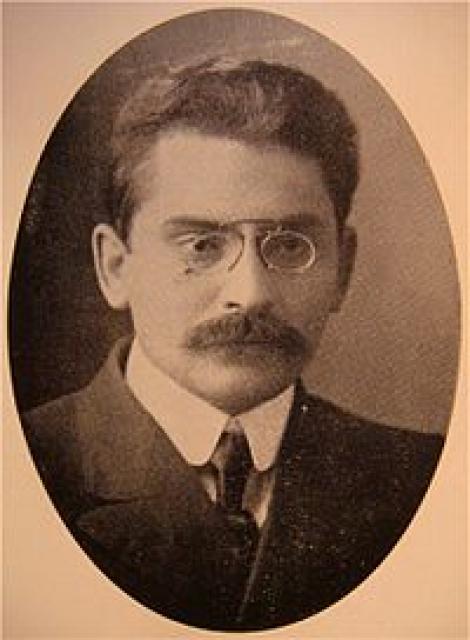
Mitrofan Bogaevskiy
 Russia
- Mitrofan Petrovich Bogaevsky: The Voice of the Don Cossacks
- Return to the Don
- The Dawn of Revolution
- Reviving Cossack Self-Governance
- The Don Military Circle
- Conflict and Opposition
- Arrest and Execution
- Legacy
Mitrofan Petrovich Bogaevsky: The Voice of the Don Cossacks
Early Life and EducationMitrofan Petrovich Bogaevsky was born on November 23, 1881, in the Petrovskoye estate near the Millerowo station. As a Don Cossack, he hailed from the Kamenskaya village in the Oblast of the Don Host. After graduating from the Faculty of History and Philology at St. Petersburg University, where he led the Don Cossack community, Bogaevsky embarked on a teaching career.
Return to the Don
In 1911, Bogaevsky returned to the Don and taught at the Novocherkassk Gymnasium. In 1914, he became the director of the gymnasium in Kamenskaya. Passionate about Don Cossack history, he advocated for the revival of ancient traditions and the development of local culture. As an eloquent orator known as the "Golden-Tongued of the Don," Bogaevsky wielded great influence among his fellow Cossacks.
The Dawn of Revolution
Following the February Revolution of 1917, Bogaevsky played a pivotal role in the First All-Russian Cossack Congress in Petrograd in March. In April, he presided over the First Congress of the Don Cossacks in Novocherkassk, where he was appointed chairman of the executive committee tasked with drafting a charter for the Don Military Circle.
Reviving Cossack Self-Governance
Bogaevsky's vision for the Don Cossacks centered around the revival of their traditional governance system. He proposed a document that enshrined principles of equality, universal suffrage, and autonomy within Russia. The document also acknowledged indigenous peasants' rights to land and established a maximum landholding limit to promote social equity.
The Don Military Circle
After a 196-year hiatus, the Don Military Circle was reconvened from May 26 to June 18 in Novocherkassk. Bogaevsky's proposals were overwhelmingly accepted, and he was elected Chairman while General Aleksey Kaledin became Troop Ataman. The Circle's decision to assert independence in October 1917 reflected growing Cossack resistance to the new Bolshevik government.
Conflict and Opposition
Bogaevsky actively opposed the Bolsheviks and became one of the ideological leaders of the armed uprising that marked the beginning of the Russian Civil War. He joined the "Don Civilian Council" in December, which aspired to become an all-Russian government. However, the uprising failed, and Bogaevsky's influence waned.
Arrest and Execution
On January 29, 1918, Bogaevsky resigned his positions alongside Kaledin. On March 6, he was arrested by the Red Guards in Great Knyazheskaya village. He was detained in Novocherkassk and later in Rostov-on-Don, where he was eventually executed on April 1, 1918.
Legacy
Mitrofan Petrovich Bogaevsky's legacy as a defender of Cossack traditions and autonomy continues to resonate today. His eloquent speeches and unwavering determination left an enduring mark on the history of the Don Cossacks and their struggle for self-determination


