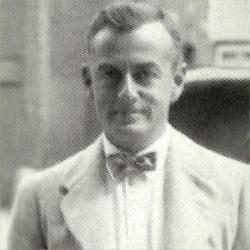
Moris Maeterlinck
 Belgium
- Early Life and Education
- Literary Breakthrough and Symbolism
- Collaboration with Georgette Leblanc and Later Plays
- Nobel Prize and Later Life
- Exile and Death
- Legacy and Influence
Early Life and Education
Maurice Polydore Marie Bernard Maeterlinck was born on August 29, 1862, in Ghent, Belgium, into a wealthy Flemish family. His father was a notary, and his mother was the daughter of a prosperous lawyer. From 1874 to 1881, Maeterlinck attended a Jesuit college. He developed an early interest in poetry and literature but was pressured by his parents to study law at Ghent University.
Upon graduating in 1885, Maeterlinck traveled to Paris to pursue legal studies. However, he spent much of the six months he was there immersed in literature. In Paris, he met symbolist poets Stéphane Mallarmé and Villiers de l'Isle-Adam. Inspired by decadent writer Joris-Karl Huysmans, Maeterlinck read Jan van Ruusbroec's 14th-century Flemish mystical text, "The Adornment of the Spiritual Marriage," which he translated into French in 1891.
Literary Breakthrough and Symbolism
After returning to Ghent, Maeterlinck worked as a lawyer while continuing to write. In 1886, his novella "The Massacre of the Innocents" was published in the Parisian monthly "La Pleiade." In 1889, he released the poetry collection "Serres chaudes" and the fairy-tale play "La Princesse Maleine." The influential French critic Octave Mirbeau praised "La Princesse Maleine" as a masterpiece and compared its author to Shakespeare.
Encouraged by the celebrity critic's praise, Maeterlinck abandoned his legal practice and devoted himself entirely to writing. In the years that followed, he penned the symbolist plays "L'lntruse" (1890), "Les Aveugles" (1890), "Les Sept Princesses" (1891), and "Pelleas et Melisande" (1892). These plays are characterized by their mysterious, Märchen-like atmosphere, minimal dialogue, and enigmatic subtexts.
In 1894, Maeterlinck wrote three plays for marionettes: "Alladine et Palomides," "Interieur," and "La Mort de Tintagiles." He turned to puppet theater because, unlike live actors, puppets could embody symbols and convey the archetypal nature of his characters.
Collaboration with Georgette Leblanc and Later Plays
In 1895, Maeterlinck met Georgette Leblanc, an actress, and singer who became his companion for 23 years. Leblanc, a strong-willed and educated woman, served as Maeterlinck's secretary, impresario, and protector. She also played leading roles, often as powerful women, in his plays, such as "Aglavaine et Selysette" (1896), "Ariane et Barbe-Bleue" (1901), "Monna Vanna" (1902), and "Joyzelle" (1903). These plays are considered more conventional and, according to Maeterlinck's biographer Bettina Knapp, less compelling than his fairy-tale and puppet plays.
In 1896, Maeterlinck and Leblanc moved from Ghent, where his plays had been met with mockery, to Paris. During these years, Maeterlinck wrote metaphysical essays and treatises that were collected in "Le Tresor des humbles" (1896), "La Sagesse et la destinee" (1898), and "La Vie des abeilles" (1901), which drew analogies between the behavior of bees and human society.
"L'Oiseau bleu" ("The Blue Bird"), arguably Maeterlinck's most popular play, premiered in 1908 at the Moscow Art Theatre under the direction of Stanislavski. "The Blue Bird" was also performed in London, New York, and Paris. In this play, Maeterlinck returned to the symbolic, fairy-tale mode of his works from the 1890s. "The Blue Bird" captivated audiences not only with its imaginative fantasy but also with its allegorical meanings. Maeterlinck continued the story of one of its characters, Tyltyl, in the play-féerie "Les Fiancailles" (1918).
Nobel Prize and Later Life
In 1911, Maeterlinck was awarded the Nobel Prize in Literature "in appreciation of his many-sided literary activities, and especially of his dramatic works, which are distinguished by their richness of imagination and their poetic fancy." In his speech, Swedish Academy member S.D. Wiersen singled out the play "Aglavaine et Selysette" for special praise, an assessment that is at odds with the generally low opinion of this play today. Due to illness, Maeterlinck was unable to attend the award ceremony, and the prize was presented to the Belgian ambassador to Sweden, Charles Woeste. Shortly after, Maeterlinck was offered membership in the prestigious Académie Française, an offer he declined as it required him to renounce his Belgian citizenship.
During World War I, Maeterlinck attempted to enlist in the Belgian civil guard but was ineligible due to his age. His patriotic efforts instead consisted of giving pro-Allied lectures in Europe and the United States. By this time, his relationship with Leblanc had deteriorated, and they separated after the war. In 1919, Maeterlinck married Renée Dahon, an actress who had appeared in "The Blue Bird."
In his later years, Maeterlinck wrote more essays than plays. Between 1927 and 1942, twelve volumes of his collected works were published, the most notable being "La Vie des termites" (1926), an allegorical denunciation of communism and totalitarianism, which he likened to termites, highly organized but mindless creatures. Other philosophical treatises from this period include "La Vie de l'espace" (1928), "La Grande feerie" (1929), and "La Grande Loi" (1933).
Exile and Death
In 1939, as Nazi Germany threatened Europe, Maeterlinck fled to Portugal under the protection of Portuguese dictator Antonio Salazar. However, when it became clear that Portugal might not escape Hitler's clutches, Maeterlinck and his wife relocated to the United States, where they remained for the duration of the war. They returned to Nice, France, in 1947, where Maeterlinck lived in his villa, "Orlamonde." He died of a heart attack on May 6, 1949, and was buried without religious rites, in accordance with his lifelong atheism.
Legacy and Influence
In addition to the Nobel Prize, Maeterlinck was awarded an honorary doctorate from the University of Glasgow, the Belgian Grand Cordon of the Order of Leopold (1920), and the Portuguese Order of the Sword of St. James (1939). In 1932, the King of Belgium bestowed upon him the title of Count.
Maeterlinck's enduring reputation rests primarily on his plays, which continue to be performed today. He is considered one of the pioneers of the Theatre of the Absurd, and his works have had a profound influence on the plays of Samuel Beckett. Debussy's opera "Pelleas et Melisande" is a staple of the international operatic repertoire.
As the critic Joanna Pataki Kosoff wrote in 1967, "Maeterlinck neither preaches nor judges. His art never lapses into propaganda, for it appeals to those fundamental values which lie beyond politics and psychiatry." In her monograph "Maurice Maeterlinck" (1975), Bettina Knapp suggests that Maeterlinck's frequent use of the fairy tale genre stems from its ability to "reach down to the deeper collective unconscious that affirms itself in man's feeling for nature."