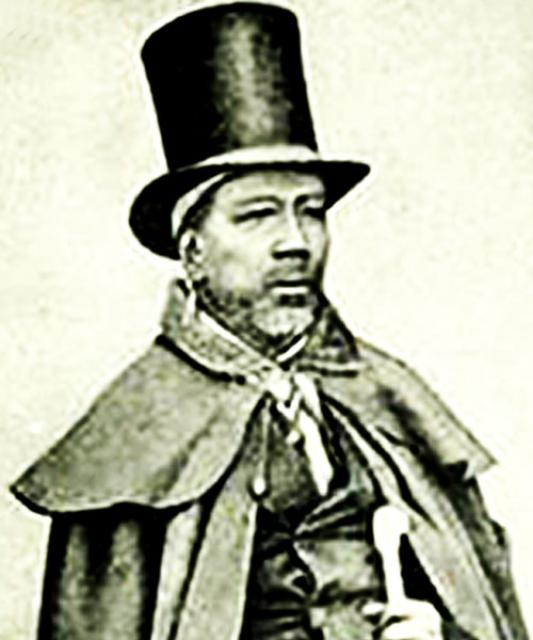
Moshveshve I
 South Africa
- Chief of the Basotho Nation: Moshoeshoe
- Mfecane and Expansion of the Basotho
- Moshoeshoe's Diplomacy
- Alliances with European Missionaries
- Conflict with the Boers
- Wars and British Intervention
- British Protectorate and Legacy
Chief of the Basotho Nation: Moshoeshoe
Early Life and Rise to LeadershipMoshoeshoe, born in 1786 or 1787 during a famine, was given the name Lepoqo ("deprivation"). His parents raised him as a future leader and statesman. His leadership skills emerged when he led a punitive raid against a cattle thief, successfully reclaiming hundreds of cattle. He was then given the name Moshoeshoe ("he who shaves"), rumored to have derived from shaving his opponent's beard.
Mfecane and Expansion of the Basotho
Moshoeshoe's reign coincided with the rise of the Zulu under Shaka. The Zulu began conquering smaller clans along the eastern coastline in the early 1800s, incorporating them into their growing kingdom. This caused widespread warfare and upheaval, known as the Mfecane (or Difaqane in Sesotho). Threatened by Nguni raiders, the inland Basotho under Moshoeshoe abandoned Butha-Buthe and relocated to the Qiloane Plateau. This stronghold, later known as Thaba Bosiu ("mountain of the night"), remained unconquered by adversaries.
Moshoeshoe's Diplomacy
As a diplomat, Moshoeshoe was known for his magnanimity towards vanquished enemies. He offered them land and protection, strengthening his control over the Basotho as refugees integrated into his nation.
Alliances with European Missionaries
By the mid-19th century, Moshoeshoe had consolidated the power of the Basotho in Basutoland and became known as Morena e Moholo (Great Chief) and Morena oa Basotho (King of the Basotho). Recognizing the need for firearms and the counsel of a white advisor, he heard from other tribes about the benefits of missionaries. Moshoeshoe negotiated with the Paris Evangelical Missionary Society, choosing a state that had no territorial ambitions in Southern Africa. Three society representatives arrived: Eugène Casalis, Constant Gosselin, and Thomas Arbousset.
Conflict with the Boers
In the late 1830s, Boers from the Cape Colony appeared on the western borders of Basutoland, claiming land. Jan de Winnaar led the initial Boer settlements in the Matlakeng area in May-June 1830. Boer farmers claimed the land between the Orange and Caledon (Mohokare) rivers, which they alleged the Basotho had abandoned. Moshoeshoe responded, "The land which they occupied belonged to me, but I did not object to their grazing their cattle there until they could move further away, provided they would live in peace with my people and acknowledge my authority."
Casalis later noted that the Boers initially requested temporary rights but, when they felt "strong enough to throw off the mask," they demanded the land as their own. The following 30 years brought continuous warfare for Moshoeshoe.
Wars and British Intervention
Moshoeshoe signed a treaty with British Governor J.T. Napier, which included the annexation of a small Boer-occupied territory known as the Orange River Colony. The Boers opposed this move, but were defeated in 1848. The settlers bore resentment towards both the British administration and the Basotho. War broke out in 1851. The Basotho inflicted a humiliating defeat on the British army at Kononyana and repelled an attack the following year. Moshoeshoe promptly sent envoys to the British commander and negotiated a peace treaty. After a victory over the Tlokwa in 1853, Moshoeshoe secured peace on his borders.
In 1854, the British withdrew their troops from the region, effectively establishing two independent states: the Boer Orange Free State and the Sotho kingdom.
Moshoeshoe defeated the Orange Free State in 1858 but lost much of his western plains in 1865. The final war in 1867 ended only after the British colonial administration and Moshoeshoe appealed to Queen Victoria, who agreed to make Basutoland a British protectorate. The British sought to halt Boer expansionism, while Moshoeshoe recognized that he could not hold out against the settlers indefinitely.
British Protectorate and Legacy
In 1869, Moshoeshoe signed the Treaty of Aliwal with the British, establishing the borders of Basutoland (later Lesotho), which have remained unchanged since. Fertile lands to the west of the Caledon were awarded to the Boers, reducing the size of Moshoeshoe's kingdom by half.
Moshoeshoe's leadership, diplomatic skills, and foresight played a crucial role in preserving the Basotho nation in the face of relentless pressure from Zulu raiders and European settlers. He remains a revered figure in Lesotho and across Southern Africa.