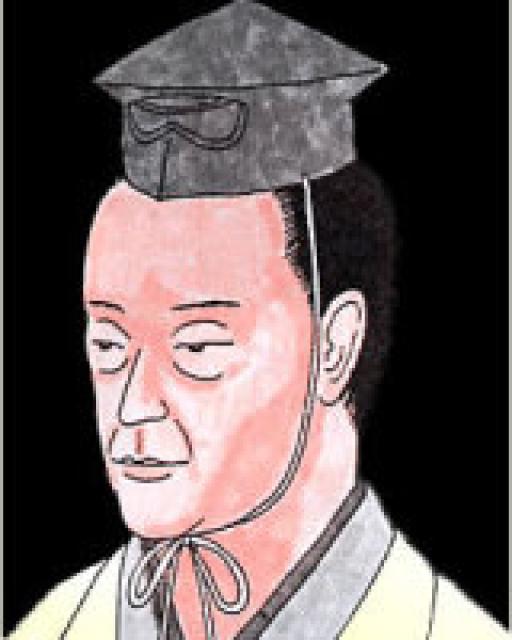
Motokiyo Zeami
 Japan
Japan- Childhood and Training
- Courtly Life and Patronage
- Success and Legacy
- Political Intrigues
- Retirement and Later Life
- Exile and Return
- Legacy and Posthumous Honors
Childhood and Training
Japanese actor, playwright, and theorist of acting, Zeami Motokiyo was born in 1363 in the village of Kamijima, Nagaoka. He hailed from a diverse background: his father was an actor (Kan'ami Kiyotsugu), his paternal grandfather a samurai, and his maternal lineage included priests. From an early age, Zeami was trained in the art of acting at the Komparu-za guild.
Courtly Life and Patronage
In 1374, Zeami became a page to the 16-year-old shogun, Ashikaga Yoshimitsu, when Kan'ami's troupe, the Yuzaki-za, became the shogun's patron. This position afforded Zeami access to quality education and refined culture. Court poet Nijo Yoshimoto played a significant role in nurturing Zeami's talents, even bestowing the stage name Fujiwaka (meaning "wisteria youth") on him. As a participant in court life, Zeami witnessed and studied numerous rituals and ceremonies.
Success and Legacy
Following his father's death in 1384, Zeami inherited the troupe leadership at the age of 22 and assumed the title Kanze-dayu II. Under his guidance, the troupe expanded and absorbed several other acting guilds, surpassing rival troupes. Zeami continued his acting career and was officially designated as the foremost actor in 1399.
Political Intrigues
After the death of his patron, Yoshimitsu, in 1408, Zeami faced political intrigue and was barred from performing in the capital. He continued performing in the provinces and was again named the best actor in 1413.
Retirement and Later Life
On the eve of his 60th birthday, Zeami retired from acting, passed on the troupe to his eldest son, and adopted the monastic name Shioki Kiyoshi. He still performed occasionally but dedicated most of his time to teaching acting to his sons and nephew. This period witnessed the creation of Zeami's most significant plays and treatises on the art of acting.
Exile and Return
In 1432, Zeami's eldest son was assassinated. Zeami himself was exiled to Sado Island at the age of 72, where he continued to write. After three years, he was allowed to return to the capital.
Legacy and Posthumous Honors
Zeami passed away in 1443 and was interred in Fuganji Temple in Yamato Province with the posthumous name Shio Zenmon. A crater on Mercury was named in his honor, and his life and teachings continue to inspire artists and scholars today.