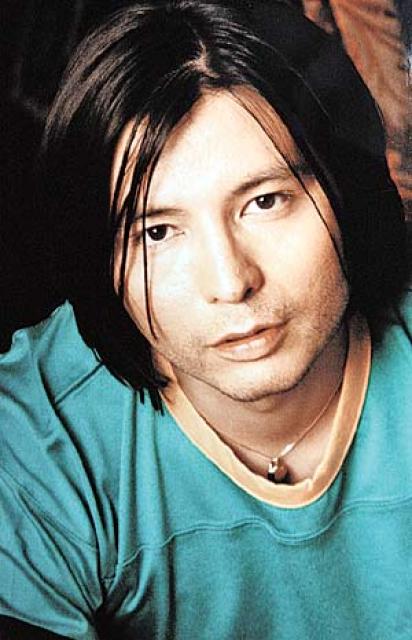
Murat Nasyrov
 Russia
Murat Nasyrov brought a warm, expressive tenor to Russian-language pop, turning songs such as “A Boy Wants to Go to Tambov” and “I Am You, You Are Me” into fixtures of 1990s radio. A singer, songwriter, and composer of Uyghur heritage, he moved from Almaty to Moscow to study music and built a career that connected the pop scenes of Kazakhstan and Russia.
Early life and musical training
Nasyrov was born on December 13, 1969, in Almaty, then known as Alma-Ata and part of the Kazakh Soviet Socialist Republic. He was the youngest of five children in a Uyghur family. Music was part of home life: his father sang and played traditional Uyghur instruments, and Nasyrov later recalled learning guitar from his older brother when he was eight.
After school, he completed military service. In 1991 he moved to Moscow and entered the Gnessin State Musical College to study vocal performance. That same year, he won the Grand Prix at the Yalta-91 young performers’ competition, singing “The Wizard Apprentice,” a song associated with Alla Pugacheva. The prize gave the aspiring performer a first major public breakthrough and helped launch his professional career.
The sound of a pop breakthrough
Nasyrov’s early work included singing Russian-language theme songs for animated series such as DuckTales and Darkwing Duck. He also performed with the group A’Studio and began recording his own material. His first album, Kto-to prostit (“Someone Will Forgive”), introduced his distinctive voice and melodic, polished pop sound.
His biggest hit arrived in 1997 with “Malchik khochet v Tambov” (“A Boy Wants to Go to Tambov”), a Russian-language adaptation of the Brazilian song “Tic, Tic, Tac.” The track became a defining hit of the decade and earned him a Golden Gramophone award. Another signature song, “Ya — eto ty, ty — eto ya” (“I Am You, You Are Me”), further cemented his popularity. He recorded “Lunnyye nochi” (“Moonlit Nights”) with singer Alyona Apina, and the two toured together.
Across several albums, Nasyrov combined radio-friendly pop with his own songwriting. He also continued to explore his cultural roots. His later Uyghur-language album, Qaldim Yalghuz, featured his own songs and traditional instruments, bringing elements of Uyghur musical heritage into a contemporary pop setting.
Family and later years
Nasyrov shared his life with singer Natalia Boyko. They had two children, daughter Liya and son Akim. He remained closely associated with both the Russian and Kazakh music worlds and was known for performing his songs live with a strong, unprocessed vocal sound.
Nasyrov died in Moscow on January 19, 2007, at the age of 37. His sudden death cut short a career that had reached millions of listeners, but his best-known songs have remained part of the region’s pop memory. His legacy also includes a rare bridge between mainstream Russian-language pop and the Uyghur musical traditions that shaped his earliest sense of music.